Sunday, January 10, 2016

My Top Ten Films of 2015

Let me throw out the usual caveats before we get down to business.  These are my personal favorite films.  There are other films that easily could have been included.  You won’t agree with all of them (but feel free to tell me that).  Enjoy!

Films I haven’t seen:  Anomalisa, The Hateful Eight, Bridge of Spies, The Assassin, Chi-Raq, Dope, The Lobster, Son of Saul, The Wolfpack

Honorable mentions:  Star Wars:  The Force Awakens, Kingsman:  The Secret Service, The Hunger Games:  Mockingjay – Part 2, It Follows, Mission:  Impossible - Rogue Nation, Very Semi-Serious, American Ultra


10.  The Gift


Joel Edgerton made one hell of a directing debut with this genre exercise, crafting a character-based thriller that keeps you guessing as to who exactly the bad guy is.  The script hits all the beats you want without feeling rote, the shot composition feeds the paranoia, and the acting trio of Edgerton, Jason Bateman, and Rebecca Hall are near-perfect.  No other movie this year left me scrambling to figure out the ending like this one did, and it still plays well on repeated viewings.


9.  The Keeping Room


Criminally underseen and divisively reviewed, The Keeping Room is a knowingly art-house genre blender that won’t appeal to everyone.  One part western, one part home invasion thriller, and one part allegory, it’s the tale of three southern women confronting the brutal end of the American Civil War.  The allegory revolves around life never turning out how we think it will be, and how whatever shatters that illusion will forever remain a monster in our past.  Moving on from these moments are difficult, and while The Keeping Room handles this and its other themes a bit roughly, a film this brimming with ideas is a rarity that I always treasure.  Plus, the cinematography and sound design are second to none.


8.  The Big Short


This is the closest you’re going to get to a comedy on my list, because while it’s about the housing crash and global economic crisis of the mid-2000s, it goes about its unappealing premise with style.  Its cocky smoothness hides a complex message, one that we all need to learn, and the broad-based appeal of its A-list cast and hilarious asides makes for some brilliant packaging.  Let’s face it, people don’t want to be lectured at for two hours.  Films that embrace the power of an entertaining idea like The Big Short are the ones that really harness what the medium can do.


7.  Testament of Youth


Testament of Youth is the Alicia Vikander-led sweeping epic that no one is talking about.  This is mystifying to me because it’s the most affecting film I saw all year.  Yes, it’s unapologetically tragic, but the story it’s based on was a real-life tragedy.  The softening of the blows that come in steady succession makes the film painful but not devastating, leaving it’s beautiful depictions of memory as the lasting reminder of what was lost.  According to both her memoir and the people who knew her, Vera Brittain was forever haunted by what happened to her during World War I, and the film captures that beautifully.


6.  Love & Mercy
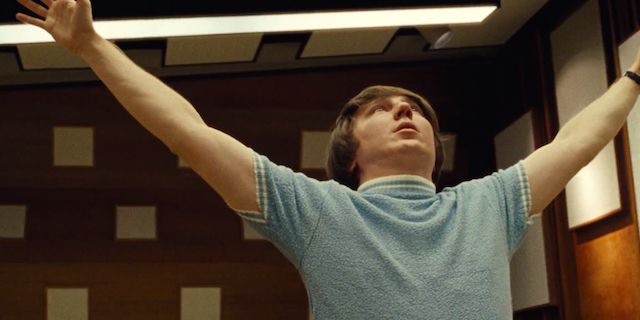

Two music biopics intertwined the artist’s music in masterful ways this year, but Love and Mercy took far more risks than Straight Outta Compton, and it’s all the better for it.  In telling the story of Beach Boy Brian Wilson in two parts, audiences get to see the brilliant but deteriorating Wilson while he wrote the acclaimed album Pet Sounds and his later ascent from the pits of mental illness.  The former are lush scenes of sound and light while the latter is a more familiar tale of love, but both are expertly sold by Paul Dano, John Cusack, and Elizabeth Banks.  How the team were able to blend these two sections together so seamlessly is one of the great achievements of the year, but Love and Mercy is a satisfying film whether you take into account the risks or not.


5.  Three Days in September


This is a small film from Macedonia that played in only a few festivals around the world.  I was lucky enough to catch it at the Chicago International Film Festival, and the entire theater I was in seemed pretty blown away.  It’s the story of two women in a remote town slowly becoming friends while also trying to keep some dark secrets hidden.  The two leads, Irena Ristic and Kamka Tocinovski, navigate their character’s changing relationships and personal fears wonderfully, and writer/director Darijan Pejovski keeps the tension slowly ratcheting up.  Pejovski listed film noir and ‘70s American cinema as influences, which is an apt representation of the film’s gritty entertainment.  This is Pejovski’s first feature-length film, and with a debut this great, I’m anxious to see what he does next.


4.  Clouds of Sils Maria


Clouds of Sils Maria is aimed pretty directly at someone like me, who likes to ponder narratives, characters, marketing strategies, and thematic ideas.  The whole business of storytelling and how it reflects real life is what fascinates me about film, so watching the story of a woman prepping for a play while confronting the time that has passed since she previously performed it ticks nearly all of my boxes.  That it also addresses the real-life people involved with the production checks the remaining boxes, so despite being very on-the-nose, I find myself thinking about and re-watching Clouds of Sils Maria quite regularly.


3.  Mad Max:  Fury Road


It’s hard to remember a film so universally loved as Mad Max:  Fury Road.  I’ve had many conversations with fellow cinephiles about it, and my co-worker has had a picture of Imperator Furiosa posted at her desk since the film’s release.  At this point, everyone’s heard the song and dance about how great this film is, and it deserves every ounce of its adoration.


2.  Goodnight Mommy


The little horror film that could, Goodnight Mommy broke out of the festival circuit on a wave of critical praise, but it’s a tough film to sell.  It takes its time setting everything up and peppering in scary images until all hell finally breaks loose.  It’s a big, horrifically glorious ending, but like the best of the genre, all that craziness is rooted in a very real and universal fear.  I’m fine with horror going big, bloody, and violent, and Goodnight Mommy doesn’t shortchange its setup.


1.  Z for Zachariah


If you couldn’t tell, I got into a lot of thrillers this year, and Z for Zachariah is the kind of slow, smart thriller that I’ve always loved.  It takes place in a secluded bit of fertile land, possibly the only one left after an unnamed disaster, and only contains three characters.  The way these three come together and interact is where all of the tension derives from, and the film manages to mine all the fears that come with being in a society and the potential of being without one at the same time.  This is very much the kind of film that feeds off of what you bring to it, because it’s not going to give you any answers.  Margot Robbie, Chiwetel Ejiofor, and Chris Pine are at the top of their games, and director Craig Zobel delivers another unsettling, technically impressive film.  As a special note, this is one of the most complex and respectful takes on religious belief that I’ve seen out of American cinema in a long time.

Sunday, December 20, 2015

The Danish Girl


The Danish Girl (film) poster.jpg

Released:  November 27th, 2015
Rated:  R
Distributor:  Focus Features
Starring:  Eddie Redmayne, Alicia Vikander, Matthias Schoenaerts, Ben Whishaw, Amber Heard
Directed by:  Tom Hooper
Written by:  Lucinda Coxon
Personal Bias Alert:  loves Vikander, haven’t read the book

6.8 of 10


            Welcome to your stuffy British Oscar bait!  You’d be hard-pressed to make a film more tailored for awards season than The Danish Girl, which has the distributor, topical storyline, and pedigree to make its run blindfolded.  In a way, that appears to be what it’s doing, as after a rousing premiere at the Venice Film Festival it stumbled in Toronto and has been limping along ever since.  But it’s still got foolproof nominations for Eddie Redmayne and Alicia Vikander, who’s strategically running in the supporting category, and remains in consideration for several other categories.  That’s the power of perception for you, because taken on its own accord, The Danish Girl deserves little more than a polite nod as you leave the theater.

            That topical storyline has to do with the growing prominence of transgendered people in Western media.  The Danish Girl draws upon the story of one of the first people to ever get sex reassignment surgery, the artist Einar Wegener/Lili Elbe (Redmayne).  I say draws upon because this story plays very loose with the facts, an easy freedom that isn’t inherently negative, but unfortunately wasn’t used here to form a well-structured movie.

            The Danish Girl is adapted from the novel of the same name, which I’m assuming is where the focus on the relationship between Einar and has wife, Gerda Wegener (Vikander), comes from.  It’s an excellent plan to root the story in the universally relatable situation of loving someone who’s changing before your eyes, and the pairing of such emotive actors as Redmayne and Vikander really allows that story to take off.  They play off of each other so well, vivaciously bubbly when they’re in love and misty-eyed when in rough patches, that the complexities of their ever-changing relationship is remarkably easy to track.

            The problem is that screenwriter Lucinda Coxon doesn’t match this relationship’s emotional arc to the plot’s structure, allowing the turning point in the relationship to come far too early and for the same dynamics to drag along for long stretches of time.  The plot itself becomes very bogged down in the physical aspects of Einar/Lili’s transition, from the adoption of feminine movements to the surgeries themselves.  This is understandable considering that her physical transformation is what she’s remembered for, but this doesn’t bear much emotional heft on its own.  By not pairing the plot’s climax to the couple’s relationship, the back half of this film becomes remarkably dispassionate, and its ending feels like nothing more than a rote bid for tears.

            Director Tom Hooper has a certain self-aggrandizing tone that he uses as his de facto mode of storytelling, which has led to two straight Best Picture nominations and certainly produces austerely beautiful films.  The Danish Girl proves to be no exception, as everything from the score, sets, costumes, and cinematography is impeccably done.  His framing of shots have often resembled posed paintings, which fits nicely with the galleries and workshops much of this film takes place in.  Stills from this movie would look lovely framed and hanging on a wall, but this style matches poorly with the film’s uneven emotional resonance, so much so that when the couple’s relationship ebbs from time to time, the film becomes very flat.  Hooper does nothing to address the story’s shortcomings, apparently feeling that a nice presentation was all the screenplay needed, which indicates a massive failure to understand the story he was tasked with telling.

              Thank god for Redmayne and Vikander, who prove to be the only ones capable of injecting some life into these stiff proceedings.  It’s encouraging that, for all of The Danish Girl’s Oscar maneuverings, the two people who truly delivered at their jobs are the only ones assured of its golden recognition.

Other Notes:
Ø  Ben Whishaw and Matthias Schoenaerts give solid, if stiff, supporting turns.
Ø  Whishaw may be one of the few people to have appeared in more films than Vikander in 2015.
Ø  I adore the way this film shows people painting through the back side of the canvas.

Sunday, December 13, 2015

In the Heart of the Sea


In the Heart of the Sea poster.jpg

Released:  December 11th, 2015
Rated:  PG-13
Distributor:  Warner Bros.
Starring:  Chris Hemsworth, Benjamin Walker, Cillian Murphy, Tom Holland, Ben Whishaw, Brendan Gleeson
Directed by:  Ron Howard
Written by:  Charles Leavitt
Personal Bias Alert:  never read Moby-Dick, likes man-versus-nature themes

5.3 of 10


            Walking through the local movie theater a few months ago, I spotted a poster for In the Heart of the Sea.  It’s a great poster, using the massiveness of the whale to emphasize the futility of men, and then I noticed that it listed the old March release date.  The film was delayed for nine months, allegedly to position it for an awards season run, but few people bought that explanation.  It originally would’ve competed with the releases of Cinderella and Run All Night, while it’s new December slot had it up against zero wide releases.  A stinker was suspected, and the long wait soured many, like me, who were intrigued by this film.  Now it’s finally out in the world, and while it’s not a complete travesty, it does blow a solid premise and a strong cast.

            In the Heart of the Sea endeavors to tell the real-life inspiration for Moby-Dick, where the crew of the whaling ship Essex is attacked and stranded by a massive white whale.  There’s no one here to call Ishmael, but the storyteller role remains, taken over by the grizzled and haunted Thomas (Brendan Gleeson) who was the cabin boy on the ill-fated trip.  Novelist Herman Melville (Ben Whishaw) drags the story out of him, and what unravels is a tale of many, but unfortunately incohesive, sides.

            Charles Leavitt gets the lone screenwriter credit here, but story credits also go to the writing duo of Rick Jaffa and Amanda Silver.  Leavitt’s spotty track record includes the excellent Blood Diamond and the terrible Seventh Son, while Jaffa and Silver have collaborated on blockbusters like Rise of the Planet of the Apes and Jurassic World.  That’s not a particularly strong team, and they clearly struggled with the cumbersome, sprawling nature of this story.  There’s a lot of characters to set up as well as the unfamiliar business of whale hunting, and then they needed to condense what is a very long story into a manageable size.  They never seem to land on how to do any of this, as characters are paper-thin but made to have unsatisfying arcs (á la Jurassic World) and the story is allowed to plod on far longer than is needed (á la Seventh Son).  To add to the messiness, there’s a part of the film that tries to take on the myriad of themes that run through the story, but there’s also clearly a pull to make this into an action film (there’s a moment where Chris Hemsworth jumps at the whale with a hatchet).  This overall disjointedness nearly ruins what should be an epic tale, one that Melville himself was able to form into an American classic.

            Luckily for the audience, even when the story struggles there’s always a top-shelf actor onscreen to make it sort of work.  Hemsworth leads the group, and even though his accent is a bit shaky, his shoulders and acting ability are more than broad enough to carry the load.  He, Benjamin Walker, and Cillian Murphy make a nice threesome as the ship’s leaders, and they smooth out some of the dark turns that the film takes.  Tom Holland plays the younger version of Gleeson, and he yet again proves to be a young actor worth watching.  But it’s the scenes back on land with Gleeson and Whishaw that pop the most, proving yet again that masterfully played conversations can be more riveting than CGI spectacles.

            And there is a lot of CGI in this thing, as everything from the whales they are hunting to the backdrop behind the characters is digitally rendered in a strangely obvious way.  It’s the kind of film where the real things feel more palpable and set apart from those that aren’t, and it’s such a pervasive feeling that it’s hard to determine whether it was intentional or not.  Director Ron Howard would be the man to ask, and whether you find this effect and his constantly moving camera beautiful or a bit annoying will be dependent on your personal taste  It certainly makes it impossible to forget that you’re watching a movie, and while it does lead to a few impressive shots, that doesn’t make up for how jarring it often is.

            In the Heart of the Sea had a tough legacy to live up to, both from the history of its story and from the talent involved in its production.  It’s disappointing that it is such a long, jumbled mess, but there’s still bright spots peppered into this long slog.  Then again, it’s kind of fitting that the filmmaker’s attempt to make an epic out of the story behind Moby-Dick ended up as their white whale.

Other Notes:
Ø  Warning:  this film contains unnecessary whale gore.
Ø  As good of a job as Hemsworth did, I still feel that he was miscast.  He’s just too lumbering and imposing of a figure to be in the cramped spaces of a boat.
Ø  Is it possible for Frank Dillane not to feel smarmy?

Wednesday, December 9, 2015

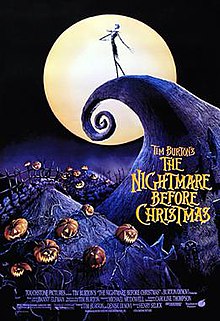
The Nightmare Before Christmas


The nightmare before christmas poster.jpg

Released:  November 13th, 1993
Rated:  PG
Distributor:  Buena Vista International
Starring:  Danny Elfman, Chris Sarandon, Catherine O’Hara, William Hickey
Directed by:  Henry Selick
Written by:  Tim Burton, Michael McDowell, Caroline Thompson
Personal Bias Alert:  doesn’t like stop-motion animation, lukewarm on Tim Burton

4 of 10


            The Nightmare Before Christmas should be one of my classics.  I was the perfect age when it came out, was drawn to dark kids fare, and was already steeped in Burton’s style.  But Nightmare slipped through the cracks to become one of those films I always knew of but never saw.  Now over twenty years later, the film seems to have lost its magic.  Perhaps replication has made it seem less original, perhaps I’m just too old, or perhaps (just perhaps) it has always been too lightweight to hold up its own reputation.

            In a world where each holiday has its own isolated town, Halloween’s frightful leader Jack Skellington (Chris Sarandon and Danny Elfman) finds himself tired of celebrating the same holiday every year.  While wandering the woods in misery, he comes across Christmas Town and is enchanted by its bright cheer.  Jack brings tidings of Christmas back to Halloween Town and endeavors to lead his newfound holiday the following year, but when his fear-loving townsfolk struggle to grasp the concept, Jack must somehow morph ghoulish ghosts into spry elves.

            It’s a silly plot, but to be fair, it is intended for very young children.  In this case, silly is fine, but lightweight is not.  So little happens in Nightmare that its brief runtime feels stretched tight.  It plays out with the intentional clunkiness of a TV special and lacks drive or stakes.  It falls prey to the idea that little kids can’t handle narrative menace, and it’s a much lesser and slightly patronizing film for it.  Consider Disney’s landmark Beauty and the Beast, released just two years before Nightmare.  This film presents kids with the prospect of being separated from your parents, bullied by a monster, and loosing forever the people that you love.  Nightmare has a potentially messed up Christmas and a bored protagonist.  See the difference?  How are children, let alone the adults being drug along with them, supposed to get invested in this story?

            As is often the answer with Tim Burton products, it’s the off-kilter, gothic style that’s supposed to reel you in.  The beauty of the film can’t be denied, even when you’re looking at worm-ridden monsters.  Burton and company designed a few truly memorable creatures here, from the lanky Jack to his pincushion admirer, which are all just the right amount of creepy.  Surrounding them are elaborate, misshapen buildings that you can imagine creaking and swaying in the wind.  Halloween Town is so perfectly themed that it’s a shock when things briefly switch to Christmas Town, with its popping colors and twinkling light.  It shows that the production team was capable of so much variety, which makes Halloween Town’s rigidly Tim Burton style a bit disappointing.  The entire look is replicated in past and future projects, the awe of which is diminished by so much repetition.  It’s still beautiful, don’t get me wrong, it’s just not enough to support an entire film.

            Filling out the scant plot is a bunch of supposedly peppy musical numbers composed by longtime Burton collaborator Danny Elfman.  While the songs have their moments, they’re filled with repetitive and semi-lazy lyrics.   Sentiments are reworded ad nauseam, and it’s not uncommon to hear nonsense phrases just because they rhyme.  The accompanying music is often pretty bare-bones, so if you’re not into the zany words, then the numbers will do little to brew your excitement.  Couple that with a ridiculously undercooked romance, and the film offers little else besides surface entertainment.

            Burton had Nightmare cooking in his brain for nearly ten years before the film went into production.  It seems to have been a passion project for the man, and perhaps because of that there’s little effort to make it appeal to a wider audience.  You’ll either be charmed by his style or you won’t, because there’s little other reason to watch this film.

Other Notes:
Ø  I’ve long been slightly creeped out by stop-motion animation.  Everything appears lifeless to me, and I have great difficulty connecting to any story told with this method.
Ø  Note that this film is Tim Burton’s baby, but he did not direct it.  He was too busy at the time with Batman Returns and Ed Wood.
Ø  The scientific method joke made me laugh out loud.  Poor Jack, it never sways public opinion.

Sunday, December 6, 2015

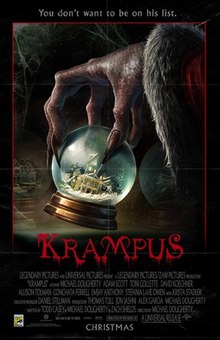
Krampus


Krampus poster.jpg

Released:  December 4th, 2015
Rated:  PG-13
Distributor:  Universal Pictures
Starring:  Adam Scott, Toni Collette, David Koechner, Allison Tolman, Conchata Ferrel, Emjay Anthony
Directed by:  Michael Dougherty
Written by:  Todd Casey, Michael Dougherty, Zach Shields
Personal Bias Alert:  was lukewarm on Dougherty’s Trick r’ Treat, likes genre blending

7.3 of 10


            Christmas horror movies have been made before, but they’re generally intended for B-movie or hard genre fanatics.  Ask the average moviegoer to name a few and you’ll likely get:  “Gremlins!  And, uh…”  The conversation won’t last long, because gleeful gore and Christmas tidings just don’t seem to go together.  It’s a balance that Krampus struggles to get right, but the effort, and Universal’s confident marketing push, is a risk to be admired.

            Director/co-writer Michael Dougherty is mining a very similar well here as his previous film, Trick r’ Treat.  Both are about an impish creature punishing those who don’t take the holidays seriously.  Perhaps they’re part of a loose series, or perhaps Dougherty just wants us to keep our holidays more reverent.  Christmas, it turns out, already had a creepy monster in its lore, which should come as no surprise considering how old and mixed its traditions are.   The character of Krampus is described in a nifty story within a story as “the shadow of Santa”, bringing carnage to those who lose the holiday spirit.  He’s inadvertently summoned by the central family’s youngest son, Max (Emjay Anthony), after becoming disillusioned by his family’s bickering.  Holiday-themed horror ensues, but not without a lot of winks at the audience, because the whole thing is knowingly a bit ridiculous.

            How much leeway that gives the film is going to vary for everyone, and its charm relies on having lots of room to slip up.  The film is, in many ways, a mess.  Its characters are obnoxious stereotypes, its sentimentality seems tacked on, and it settles for scares instead of terror.  There’s also a nasty anti-middle America streak that’s hard to get over (I know lots of nice people who like hot dogs and mac n’ cheese), and yet it overcomes all of this because it’s so darn gleeful.  The love that seeps through this film for oddball horror and kitschy bad guys is effervescent, and the tone weirdly fits with Christmas’s garish traditions.  It’s genuinely fun to watch this family get terrorized, and even though you don’t want to see them die, you do want to see what craziness gets thrown at them next.

            Between this and the anthology-based Trick r’ Treat, Dougherty proves to have a varied and imaginative take on his monsters.  Both films send all sorts of creepy-crawlies after their victims, and while they’re based on horror staples like clowns, children, and ancient demons, there’s always a twist to take things up a notch.  Either due to budget constraints or personal taste, Dougherty relies mostly on practical effects, working with Weta Workshop to create some very memorable monsters that any Planet Hollywood should proudly display.  Krampus himself is introduced in a rather memorable scene, and even if he never proves to be as terrifying as his introduction implies, he’s still a noteworthy baddie in the annals of PG-13 horror.

            Krampus, for all its odd mixing, never does anything truly original.  It holds very tight to clichés, but the gleeful way it goes about its story will earn it many laughs and cheers.  The ending is a letdown, that’s all I’ll say, but it’s a big one considering how assured it had been up until that point.  Still, there are so many worth-while moments that its flaws become overwhelmed, leaving audiences with an appetite for more holiday carnage should Dougherty choose to continue his series.

Other Notes:
Ø  It’s not lost on me how difficult it must’ve been for the entire cast to hit the same note tone-wise.  Kudos all around.
Ø  Without spoiling it, there’s a plot point early on that I was terrified that they would renege on.  Thankfully, they don’t.
Ø  The score in this film is inventive and near-perfect.
Ø  And so the legend of ‘the noodle incident’ is expanded.

Wednesday, December 2, 2015

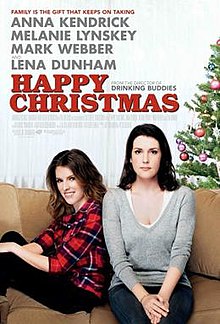
Happy Christmas


Happy Christmas poster.jpg

Released:  July 25th, 2014
Rated:  R
Distributor:  Magnolia Pictures
Starring:  Anna Kendrick, Melanie Lynskey, Lena Dunham, Joe Swanberg, Mark Webber
Directed by:  Joe Swanberg
Written by:  Joe Swanberg
Personal Bias Alert:  hit-and-miss on mumblecore, likes Anna Kendrick

7 of 10


            Mumblecore is quietly becoming one of the biggest filmmaking movements in America, but its founders reject that there’s any organization involved.  Instead, they surmise that the characteristic low-budget, organic feel is a natural response to mainstream cinema’s swelling budgets and rote stories.  Many of the founders are already making forays into bigger pictures, with Lynn Shelton, Mark Duplass, and Joe Swanberg attracting a variety of mainstream actors to their projects.  Despite this shift, Swanberg has chosen to keep his budgets low and with Happy Christmas reverts back to a micro-budget style (the film was made for a reported $70,000) after maxing out at $1 million for Drinking Buddies.  How this is possible with a cast that includes Anna Kendrick, Lena Dunham, and Melanie Lynskey is a mystery, but it’s one that you won’t bother to consider when watching the thoroughly enjoyable Happy Christmas.

            As a hallmark of the subgenre, the film is largely improvised, leaving the plot to be a loose, shaggy thing that doesn’t go anywhere drastic.  There’s a 30ish couple (Swanberg and Lynskey) with a young baby and a couch-surfing little sister (Kendrick) in need of a restart.  There’s hints early on of animosity that never quite blossoms.  Instead, the film circles around a story of familial love and responsibility that is worth the pain.  It’s a gentle conflict, but one that most people will recognize.  It’s refreshing, given the histrionics that come with most films about families, to find one that captures the calmness of day-to-day operations.  There’s annoyance and frustration, yes, but there’s also an affectionate history and a bond that runs too deep to break.

            Another easy cliché that the film manages to avoid is pigeonholing Kendrick’s Jenny as a good-for-nothing slacker.  She’s troubled and there’s hints that she’s rebounding from a bad relationship, but she’s also genuinely interested in her brother and sister-in-law’s life, not wanting to interrupt it for too long.  Kendrick plays her as someone smart enough to know that she’s intruding, and her attempts to make herself useful is what staves off animosity.  These efforts lead to a sweet relationship between Kendrick and Lynskey, one that feels genuine and is wonderfully navigated by the two actresses.  They make it feel as if they wander into the understatedly powerful moments that occur between these two characters, and given the genre, perhaps that’s what actually happened.

            However, the style sometimes gets in the way, as almost all of the moments when Happy Christmas stumbles can be traced back to its mumblecore tenets.  The aesthetic simply isn’t for everyone, and the low-fi camerawork, lighting, and sound design doesn’t make for an elegant film.  More coverage shots would give the film some energy, and the lackadaisical plot inevitably leads to some inconsequential scenes.  There’s a sense that Swanberg wasn’t out to make a perfect film but to capture some small moments that aren’t often observed.  This is something he does quite well, but it doesn’t make for a complete film.

            Despite its shortcomings, Happy Christmas is carried across the finish line on the backs of Kendrick and Lynskey.  Everything about the film quickly fades from your mind except a few raw and wholly recognizable moments between these two.  If that is truly all that Swanberg wanted to capture, then the mission was accomplished.

Other Notes
Ø  Here’s hoping that Lynskey gets more starring roles.
Ø  I’ve never taken to Lena Dunham, even here.
Ø  Fun fact:  the baby is played by Swanberg’s real-life daughter.

Saturday, November 28, 2015

Creed


Creed poster.jpg

Released:  November 25th, 2015
Rated:  PG-13
Distributor:  Warner Bros.
Starring:  Michael B. Jordan, Sylvester Stallone, Tessa Thompson, Phylicia Rashad
Directed by:  Ryan Coogler
Written by:  Ryan Coogler, Aaron Covington
Personal Bias Alert:  never seen a Rocky film

7.8 of 10


            It seems that in 2015, the 7th time’s the charm.  Furious 7 racked up money and praise back in April, and Creed appears to be going in the same direction.  Oddly, both films find their series at tricky crossroads, unable to continue as they had before.  The Fast and Furious series lost one of its stars.  Creed must admit that Rocky Balboa (Sylvester Stallone) can no longer box.  The magnitude of these changes cannot be understated, and if nothing else, both series have seized the moment and delivered a crowd-pleasing entry for their die-hard fans.

            In Creed, the baton is passed from Rocky to Creed’s illegitimate son, Adonis (Michael B. Jordan).  Adonis is trying to prove himself without using his father’s reputation, making his way under the surname Johnson.  Of course, the illegitimate tag gnaws at him, and he’s angered at the thought of taking the name of a man he never met.  This doesn’t stop him from taking advantage of the connection to get Rocky in his corner, though (a contradiction that is thankful acknowledged), and the two form a relationship far beyond that of coach and trainee.

            The formula for the Rocky movies have always been well-worn, and Creed does nothing to change that.  We know all along that Rocky and Adonis will form a close relationship, that complications will arise, and then a big fight will bring them back together.  Like all great sports movies, the winning and losing isn’t what it’s all about.  The fight is symbolic, and unfortunately for Creed, that symbol is its weakest link.  The film’s metaphor is too simple and too clean to knock you out, a misstep that is a holdover from writer/director Ryan Coogler’s previous film, Fruitvale Station.  Neither film is sunk by this simplicity, but it’s more apparent in this drug out behemoth.  There’s just too much tire-spinning, too many moments of macho men acting out, and yes, too many training montages.  If these moments had built on each other to complicate the core relationship then we’d be having an entirely different conversation, but the film uses them only to pound down the same points, leaving the middle section feeling a bit weary.

            Still, complicated is not a defining word of the Rocky series, and fans that are turning up for a good-ole underdog story won’t be disappointed.  Jordan turns in an effervescent performance as Adonis, showing that he’s more than capable of carrying the sweat and the charm of the series.  Stallone is as comfortable as he’ll ever be in a role, and even if he’s not your cup of tea (he’s certainly not mine), it’s hard to argue against such a solid performance.  You’re third lead here would have to be Tessa Thompson, another charismatic actor that, like Jordan, has unfortunately been held back by the color of her skin.  Both should be much bigger stars than they are, and perhaps the best thing about Creed is that the continued series should become a career stabilizer for both of them.  Thompson plays Adonis’s love interest, a role that starts out as touchingly well-rounded but unfortunately fades.  And yet, Thompson and Jordan give such excellent performances that their relationship always works, and it will be a pleasure to see where they, along with Sly’s Rocky, end up next.

            What separates Creed from the sports movie pack is just how well it’s made, partially thanks to the performances that have already been outlined and partially because of Coogler’s direction.  His faults as a writer aside, Coogler is an unusually assured young filmmaker, taking chances here that mostly pay off in a beautiful and moving film.  The camera swirls, ducks, and pounds with the fighters, and the score goes big and sweeping.  In spite of the film’s simplicity, Coogler will play your emotions like a fiddle, and that last fight will certainly leave you feeling something, even if it does fall short of the genre’s legends.

            Coogler has made Creed into a reboot worthy of continued entries.  There are aspects of these characters that would be interesting to explore, and Jordan and Thompson prove to be a duo that will be exciting to watch well into the future.  It’s a rousing success for a very simple franchise and a tantalizing taste of what it’s capable of becoming.

Other Notes:
Ø  Obviously, Rocky is not a series that speaks to me.  That I responded to this film as much as I did is pretty remarkable.
Ø  This gets my nomination for Funniest Performance by a Turtle.
Ø  I do sincerely applaud this series for willingly shifting its focus to non-white people.  I have full confidence that audiences will continue to shell out money no matter the color of the actors onscreen.