Showing posts with label movies. Show all posts

Sunday, January 10, 2016

My Top Ten Films of 2015

Let me throw out the usual caveats before we get down to business.  These are my personal favorite films.  There are other films that easily could have been included.  You won’t agree with all of them (but feel free to tell me that).  Enjoy!

Films I haven’t seen:  Anomalisa, The Hateful Eight, Bridge of Spies, The Assassin, Chi-Raq, Dope, The Lobster, Son of Saul, The Wolfpack

Honorable mentions:  Star Wars:  The Force Awakens, Kingsman:  The Secret Service, The Hunger Games:  Mockingjay – Part 2, It Follows, Mission:  Impossible - Rogue Nation, Very Semi-Serious, American Ultra


10.  The Gift


Joel Edgerton made one hell of a directing debut with this genre exercise, crafting a character-based thriller that keeps you guessing as to who exactly the bad guy is.  The script hits all the beats you want without feeling rote, the shot composition feeds the paranoia, and the acting trio of Edgerton, Jason Bateman, and Rebecca Hall are near-perfect.  No other movie this year left me scrambling to figure out the ending like this one did, and it still plays well on repeated viewings.


9.  The Keeping Room


Criminally underseen and divisively reviewed, The Keeping Room is a knowingly art-house genre blender that won’t appeal to everyone.  One part western, one part home invasion thriller, and one part allegory, it’s the tale of three southern women confronting the brutal end of the American Civil War.  The allegory revolves around life never turning out how we think it will be, and how whatever shatters that illusion will forever remain a monster in our past.  Moving on from these moments are difficult, and while The Keeping Room handles this and its other themes a bit roughly, a film this brimming with ideas is a rarity that I always treasure.  Plus, the cinematography and sound design are second to none.


8.  The Big Short


This is the closest you’re going to get to a comedy on my list, because while it’s about the housing crash and global economic crisis of the mid-2000s, it goes about its unappealing premise with style.  Its cocky smoothness hides a complex message, one that we all need to learn, and the broad-based appeal of its A-list cast and hilarious asides makes for some brilliant packaging.  Let’s face it, people don’t want to be lectured at for two hours.  Films that embrace the power of an entertaining idea like The Big Short are the ones that really harness what the medium can do.


7.  Testament of Youth


Testament of Youth is the Alicia Vikander-led sweeping epic that no one is talking about.  This is mystifying to me because it’s the most affecting film I saw all year.  Yes, it’s unapologetically tragic, but the story it’s based on was a real-life tragedy.  The softening of the blows that come in steady succession makes the film painful but not devastating, leaving it’s beautiful depictions of memory as the lasting reminder of what was lost.  According to both her memoir and the people who knew her, Vera Brittain was forever haunted by what happened to her during World War I, and the film captures that beautifully.


6.  Love & Mercy
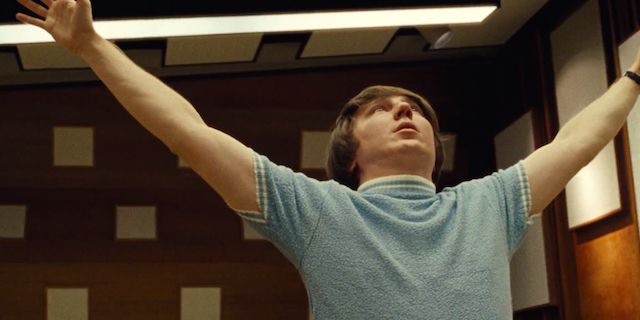

Two music biopics intertwined the artist’s music in masterful ways this year, but Love and Mercy took far more risks than Straight Outta Compton, and it’s all the better for it.  In telling the story of Beach Boy Brian Wilson in two parts, audiences get to see the brilliant but deteriorating Wilson while he wrote the acclaimed album Pet Sounds and his later ascent from the pits of mental illness.  The former are lush scenes of sound and light while the latter is a more familiar tale of love, but both are expertly sold by Paul Dano, John Cusack, and Elizabeth Banks.  How the team were able to blend these two sections together so seamlessly is one of the great achievements of the year, but Love and Mercy is a satisfying film whether you take into account the risks or not.


5.  Three Days in September


This is a small film from Macedonia that played in only a few festivals around the world.  I was lucky enough to catch it at the Chicago International Film Festival, and the entire theater I was in seemed pretty blown away.  It’s the story of two women in a remote town slowly becoming friends while also trying to keep some dark secrets hidden.  The two leads, Irena Ristic and Kamka Tocinovski, navigate their character’s changing relationships and personal fears wonderfully, and writer/director Darijan Pejovski keeps the tension slowly ratcheting up.  Pejovski listed film noir and ‘70s American cinema as influences, which is an apt representation of the film’s gritty entertainment.  This is Pejovski’s first feature-length film, and with a debut this great, I’m anxious to see what he does next.


4.  Clouds of Sils Maria


Clouds of Sils Maria is aimed pretty directly at someone like me, who likes to ponder narratives, characters, marketing strategies, and thematic ideas.  The whole business of storytelling and how it reflects real life is what fascinates me about film, so watching the story of a woman prepping for a play while confronting the time that has passed since she previously performed it ticks nearly all of my boxes.  That it also addresses the real-life people involved with the production checks the remaining boxes, so despite being very on-the-nose, I find myself thinking about and re-watching Clouds of Sils Maria quite regularly.


3.  Mad Max:  Fury Road


It’s hard to remember a film so universally loved as Mad Max:  Fury Road.  I’ve had many conversations with fellow cinephiles about it, and my co-worker has had a picture of Imperator Furiosa posted at her desk since the film’s release.  At this point, everyone’s heard the song and dance about how great this film is, and it deserves every ounce of its adoration.


2.  Goodnight Mommy


The little horror film that could, Goodnight Mommy broke out of the festival circuit on a wave of critical praise, but it’s a tough film to sell.  It takes its time setting everything up and peppering in scary images until all hell finally breaks loose.  It’s a big, horrifically glorious ending, but like the best of the genre, all that craziness is rooted in a very real and universal fear.  I’m fine with horror going big, bloody, and violent, and Goodnight Mommy doesn’t shortchange its setup.


1.  Z for Zachariah


If you couldn’t tell, I got into a lot of thrillers this year, and Z for Zachariah is the kind of slow, smart thriller that I’ve always loved.  It takes place in a secluded bit of fertile land, possibly the only one left after an unnamed disaster, and only contains three characters.  The way these three come together and interact is where all of the tension derives from, and the film manages to mine all the fears that come with being in a society and the potential of being without one at the same time.  This is very much the kind of film that feeds off of what you bring to it, because it’s not going to give you any answers.  Margot Robbie, Chiwetel Ejiofor, and Chris Pine are at the top of their games, and director Craig Zobel delivers another unsettling, technically impressive film.  As a special note, this is one of the most complex and respectful takes on religious belief that I’ve seen out of American cinema in a long time.

Sunday, April 19, 2015

Unfriended


Unfriended 2015 teaser poster.jpg

Released:  April 17th, 2015
Rated:  R
Distributor:  Universal Pictures
Starring:  Shelly Hennig, Renee Olstead, Courtney Halverson, Jacob Wysocki, Will Peltz, Moses Jacob Storm
Directed by:  Levan Gabriadze
Written by:  Nelson Greaves
Personal Bias Alert:  went in with low expectations, not a fan of social media

6 of 10


            Gimmick horror films are one of the most derided genres.  Unfriended certainly falls into that category, as the entire film is shot like you’re watching the main character’s computer screen.  Endless programs are flipped between, but Skype is the main landing point, with Facebook also a significant player.  Admittedly, even I thought this sounded awful, so when it quickly turned into a real movie, complete with well thought out framing, themes, and a solid relationship at its core, I was as surprised as everyone else.

            Kicking things off with the suicide video of teenager Laura Barns (Heather Sossaman) and a sexually playful chat between main couple Blaire (Shelly Hennig) and Mitch (Moses Jacob Storm), Unfriended subtly reassures audiences that, despite its inventive setup, it still delivers traditional horror beats.  The combo of violence and sex right at the beginning, a horror convention so expected that it’s often played with a wink and a nod to the audience, is skillfully conducted here.  The mouse hovers over the suicide video before hitting play, a technique that not only builds tension (only in our grimmest moods do we watch death videos) but also gives a look into Blaire’s conflicted mind.  We know throughout the rest of the film that Blaire has these images rattling around in her brain, even when she’s teasing Mitch or curtailing a petty fight between her friends.  This isn’t the sort of thing you easily let go.

            Our online habits in general are what’s in question here, and Unfriended has many subtle and not-so-subtle nods to these questions.  Perhaps its biggest strength is how encompassing its message is.  It avoids simple indictments of particularly nasty habits like trolling or thoughtless comments, instead choosing to examine the entirety of our online presence as a potentially timeless record of ourselves.  Your Facebook page and the myriad of postings you make online will long outlive you, and do you really want your ancestors to see how bitchy you were as a teenager?

            However commendable Unfriended’s message is, it’s still primarily a horror film, and it’s these elements that fall flat.  There is tension, but all of it derives from Blaire and her friend’s interactions after someone shows up and torments them using Laura’s old accounts.  Whether or not it’s actually Laura haunting them never becomes very interesting or scary.  The big horror moments where something attacks the characters are so obviously shaky, low-budget tricks that it all looks incredibly fake.  The fact that the attacks aren’t even original or particularly scary makes it even worse, showing the writer and director’s shortcomings on knowing how to actually scare people.  It’s not the gruesome moments that freak us out; it’s how quickly these ‘friends’ turn on each other.

            Setting the bar so low may skew this film’s ratings a bit higher than it deserves.  This is a film that selected an incredibly restrictive setup and executed it about as well as one can, but it’s held back by that premise and lacking of real horror.  It’s the surprisingly clear message and solid acting makes Unfriended a delightful surprise.

Other Notes:
Ø  It’s very smart how they directed the eye with Blaire’s cursor.
Ø  So I actually laughed at how bad one of the attacks looked, and it’s one they put in the trailer.
Ø  I like that the guy who was supposed to be drunk was drinking wine, like he’s such a sophisticated teenage alcoholic.

Wednesday, April 15, 2015

Monsters


Released:  September 24th, 2010
Rated:  R
Distributor:  Magnet Releasing
Starring:  Scoot McNairy, Whitney Able
Directed by:  Gareth Edwards
Written by:  Gareth Edwards
Personal Bias Alert:  went in with high expectations, knew there weren’t many monsters

7.3 of 10


            Perfection in movies is overrated.  A filmmaker can spend an inordinate amount of time and money trying to achieve a clean script, a stellar cast, and a flawless production, but the final product would inevitably be flawed.  It’s much more important (and much cheaper) to shoot for a film that is inviting, to make your audience feel like they’re snuggling into heavy blankets on a cold day and allow them to snuggle in deeper.  Mistakes can be forgotten, but that warm feeling a good movie engenders stays with you.  It’s difficult to find a more flawed, cozy film than Monsters, and I’m excited to add it to the lineup of films I return to year after year.

            Set few years after aliens crash-landed on Earth, photographer Andrew (Scoot McNairy) must escort his boss’s daughter Sam (Whitney Able) through alien-infested Mexico.  Why Sam is in Mexico in the first place is never made clear, but she speaks Spanish well and seems to be avoiding her impending marriage.  Her reluctance to return home is exceeded by Andrew’s annoyance at being drug away from the lucrative alien action.  Of course, the trip doesn’t go as planned, so Andrew and Sam get more action than either really want.

            Monsters is very much a two-hander, with Andrew and Sam being the only major characters in the film.  There’s a forced romance underlying their relationship that never quite feels natural, but they do have a great, non-sexual sort of chemistry that makes the film seem warm.  McNairy is the better actor, somehow managing to make Andrew’s stereotypical persona as a hardened opportunist seem lived in.  Able lacks the ability to overcome her rough characterization, but she does give Sam the vibe of a decent person, and there’s just something cute about the way she smiles at McNairy’s bemused smirk.  The charm of this film is that I would be happy watching these two do most anything.  That there’s aliens lurking in the background is just icing on the cake.

             I say the aliens are lurking because, despite its title, we don’t actually see too much of them.  This has led to some disappointment and accusations of false advertising, but there’s an argument to be made that the aliens aren’t the monsters that the title is referring to (otherwise it would be called Aliens, right?).  Instead, it might be the myriad of people who’ve taken advantage of the situation and caused Andrew and Sam harm, along with the people who are trying to help but only make the situation worse.  It’s a bit hard to glean a clear point from this movie, as the writing is lose and half-baked.  In fact, the script was more of an outline, with scenes and dialogue adlibbed as the tiny crew road tripped through Mexico and Texas.  The story itself is still clear, but deeper meaning and clean lines seem to have gotten thrown out the window at some point during the trip.

            That Gareth Edwards, who served as the cinematographer, production designer, and visual effects artist, along with writing and directing the whole shebang, was able to pull a film together in such a way is impressive.  The logistics of such a shoot were certainly daunting, especially considering their budget of less than $500,000, so the high quality of the cinematography (which varies from shaky-cam action to wistful holds) shows that Edwards is someone who instinctively understands how to present a movie.  How he pulled of what shots we do get of the aliens left me flabbergasted, as they look about as good as anything you’ll see in big-budget movies.

            The shooting style and budget inevitably led to some constraints that show in the final product, but Edwards and McNairy are talented enough to overcome them, giving this world an unusually warm, heartfelt little monster movie.

Other Notes: 
Ø  You know your guy’s not a hero when he rides on the back of a motorcycle.
Ø  Why does no one answer the phone in this movie?
Ø  What a climax! (pun intended)

Wednesday, April 8, 2015

Funny Games


Funny Games1997.jpg

Released:  March 11th, 1998
Rated:  Unrated
Distributor:  Attitude Films
Starring:  Susanne Lothar, Ulrich Mühe, Arno Frisch, Frank Giering, Stefan Clapczynski
Directed by:  Michael Haneke
Written by:  Michael Haneke
Personal Bias Alert:  vaguely knew the plot going in, aware of Haneke’s reputation for difficult films

7.2 of 10


            A film comes along every year or so that questions the amount of violence in movies.  The money flow indicates that audiences may have too healthy an appetite for bloodlust, to the point that we could reasonably be seen as the grossly overweight humans from Wall-E covered in blood splatter.  The question of why, and the more fraught question of why we enjoy it, shouldn’t be ignored, no matter how uncomfortable they make you feel.  A single film probably can’t cover all the answers, but few make you look as long or as hard at your own answers as Michael Haneke’s Funny Games.

            Haneke chose a tried and true formula for making his audience uncomfortable:  make it over-the-top and make it real.  Our desensitization is to cartoon violence, the kind where someone can get bloodlessly pummeled but still stand back up for another round.  Funny Games makes each blow count, and the progressively pained, haggard appearance of the well-to-do family being tortured is startling.  The punch of any film that pushes the boundaries like this will inevitably soften over time as others push it further (in this case Lars von Trier and Gaspar Noé come to mind), but the looks on the parent’s faces, particularly on the wife played by Susanne Lothar, remains unnerving.  If Haneke was trying to make his audience uncomfortable, then he certainly succeeded, and the film has enough bite to keep people squirming for decades to come.

            The tortured family is straight out of idyllic 1950s America:  a mom, a dad, a son, and a dog.  An ill-fated trip to the family lake house is their undoing, as they come across a pair of young men who slip inside and force them to play a series of sadistic ‘games.’  They’re more interested in playing with the family that straight-up murdering them, hence the title, and the cold calculation of their moves makes for a tense thriller.  The complication is that one of the boys, Paul (Arno Frisch), periodically addresses the audience to shock us out of the pleasurably familiar genre flow.  These conspiratorial winks and nods are what force you to take a step back and wonder why the hell you’re enjoying yourself.  The family are clearly the victims, but you’re experiencing the film in the same way that the boys are experiencing it:  perched on a couch with the smugness of someone who chose to be present.  What does that say about our knee-jerk conclusions about the boys, ourselves, and our notions of evil? 

            There are other ways that Haneke toys with our experience, but not all work as well.  An overlong scene in the back half of the movie grinds the tension to a halt and doesn’t add much (perhaps, as Paul later remarks, it was just to get to a feature-length runtime).  The music choices, though, were the biggest drawback.  They are jarring in a completely unnecessary way, jerking you out of the flow of the film far too quickly.  There’s already plenty of reminders that we’re watching a movie, but most operate in a quiet, clean way that encourages contemplation, while the wrenching of the music engenders nothing but a feeling of nervous fear.

            Still, you get the sense that every tiny move Haneke made was purposeful, and most of them work towards his main point.  The boys, who are both in the awkward stage just before manhood, are the precise demographic that Hollywood targets for its most violent films.  And yet, the violence occurs almost exclusively off screen, with the boys’ games and their stagings so neatly laid out that you sense the crux of Haneke’s point lying somewhere behind that map.  The point you come up with will undoubtedly be different than my own, but what’s clear is that Haneke went into Funny Games with a purpose that was relentlessly executed.

Other Notes:
Ø  The true climax of the film is one last nod to the audience, a final reminder that we chose to sit through these events when we could’ve left at any time.
Ø  What is up with the cast dying?  Three of the main actors are now dead, aged 54, 51, and 38.
Ø  This original version is in German.  Haneke made a shot-for-shot remake in English in 2007, which I haven’t seen.

Sunday, April 5, 2015

Furious 7


Furious 7 poster.jpg

Released:  April 3rd, 2015
Rated:  PG-13
Distributor:  Universal Pictures
Starring:  Vin Diesel, Paul Walker, Dwayne Johnson, Michelle Rodriguez, Jordana Brewster, Tyrese Gibson, Chris “Ludacris” Bridges, Kurt Russell, Jason Statham
Directed by:  James Wan
Written by:  Chris Morgan
Personal Bias Alert:  never seen any Fast & Furious movies, intrigued by James Wan directing

3 of 10


            Nothing in Furious 7 is subtle; the cars are fast, the butts are in your face, and the ‘character beats’ hit you like a sledgehammer.  Obviously, this film’s production was difficult given the death of star Paul Walker mid-shooting, and the last thing I wanted to do was badmouth him or this film.  No matter what kind of films he made or how he died, Walker was a person, and the life of a person demands respect.  That sentiment and the cast and crew’s personal loss colors this film, but it’s still a movie, and I still didn’t like it, as much as I cringe even writing that.

            Preceding all this, many people’s curiosity was piqued when James Wan, a horror auteur known for Saw, Insidious, and The Conjuring, was selected as the next director for the series.  An action film about a street racing crew seemed out of his wheelhouse, and while horror gives its directors plenty of opportunity for lavish style, the Fast & Furious films are lavish in an entirely different way.  They are essentially a string of action set pieces, the bigger the better, held loosely together by a faint plot.  Wan certainly understood the formula, as Furious 7 is chock full of ridiculously staged action that knows to focus more on making things look cool than having it make any sense.  One of the biggest sequences, which featured prominently in the trailers, is a scene where cars and drivers were dropped from a plane.  It is insane in every way; it could never happen in a world where physics exists, but it still gets your heart pounding.  Wan captured this and every other action sequence with well-staged shots and quick cuts, barraging audiences with thrilling images that pass by in such rapid succession that they rarely make sense or add up to any clear idea of what the hell is going on.  These thrills are quick and cheap (in the sense that they’re meaningless, not that they don’t cost a hell of a lot of money).  However, this is the same effect you would get from watching well-funded clips in quick succession.  It is not a movie.

            The loose plot that holds these sequences together involves the murderous revenge by the brother of a man the crew took down in a previous film.  The crew, led by Vin Diesel’s Dominic Toretto, bands together in a kill-or-be-killed situation that turns into one of the most cleanly convoluted plots I’ve seen in years.  It’s clean only because the characters explain in painfully repetitive exposition what the next step in the process is.  The process itself doesn’t make a lick of sense, which, admittedly, didn’t seem to be a goal of Furious 7.  It was much more genuine about its subplot surrounding Paul Walker’s Brian O’Conner struggling to settle into family life, juxtaposing that with how easily he operates in the impromptu family of the crew.  As Furious 7 is the opposite of subtle, they ram this down your throat by constantly referring to each other as family and having everyone talk about Brian’s conundrum.  It’s clunky because it was certainly added in after Walker’s death, but it’s mostly heartfelt, especially when it’s coming from Diesel’s mouth.

            Thankfully, Walker turned in a fine performance.  He sold the outrageous action well, as did most of the cast, and they looked good standing next to cars.  Little more was asked of them, and the few scenes that do contain human dialogue was rushed through so quickly that poor performances were hardly worth noting.

            Simply put, this movie is not for me.  I don’t care about cars or muscles or derrieres.  I’m bored by mindless action and momentary thrills, and most of all, I hate wooden characters, the ones that masquerade as people when their entire persona and relationships can be summed up in a single phrase (which one character actually does).  None of these things are charming to me, nor does it pass for mindless entertainment, which is what many people praise these films for being the epitome of.  Furious 7’s chosen idiocy actively offends even the most basic parts of my brain, and that just isn’t fun to me.

Other Notes
Ø  The title on the movie poster is Furious 7.  The title card on the movie is Furious Seven.  Did no one discuss how the title was going to be written?
Ø  This is the kind of movie where a character says they’re going to Dubai, then it cuts to them in Dubai, and there’s still text at the bottom of the screen indicating that it’s Dubai.  You know, in case you forgot what the character said five seconds ago.
Ø  I feel like crap writing this.  RIP Paul Walker

Wednesday, April 1, 2015

Mystic River


Mystic River poster.jpg

Released:  October 15th, 2003
Rated:  R
Distributor:  Warner Bros.
Starring:  Sean Penn, Tim Robbins, Kevin Bacon, Laurence Fishburne, Marcia Gay Harden, Laura Linney
Directed by:  Clint Eastwood
Written by:  Brian Helgeland
Personal Bias Alert:  likes Clint Eastwood movies, likes slow, moody dramas

8.5 of 10


            Mystic River is one of those films that’s about many things, none of which are hidden but are too painful to look directly at.  Instead, it flits about from the main storyline to the subtext to the characters, orbiting around the same bleak idea that does more to make the film dark than its muted lighting or pedantic pace.  A quick movie it is not, nor does it want to be one.  It wants you to feel the weight of every event, to understand the context, and to know the ramifications without ever having to see them.  This fictional slice of Boston is as well-built as George R.R. Martin’s Westeros or Tolkien’s Middle Earth, and the drama that plays out there is as grand in scale as either of those epics.

            Sean Penn anchors the film as Jimmy Markum, a former bad boy who’s settled into a life of respected domesticity.  When his daughter turns up murdered, the neighborhood knows what will be unearthed in Jimmy, and no one dares to stand in his way.  Tim Robbins and Kevin Bacon also star as Jimmy’s childhood friends, Dave and Sean.  The three boys were together when Dave was picked up by two men who abused him for several days, an incident that none of them were ever able to shake.

            A large portion of the film follows Sean, who’s now a cop, as he and his partner investigate the murder of Jimmy’s daughter.  The whodunit forms the backbone of the story from a structural standpoint, but it’s the least interesting portion of the film, at times drawing too much focus away from the three men.  Every story needs a structure, but the best come up with something that ties in firmly with the themes that run through it.  Mystic River is a bit too loose for such a neat bow, and at times the procedural aspect seems just as rote as the cop shows you find playing endlessly on cable television.

            What’s truly captivating is Jimmy and Dave, who’ve remained friendly over the years and are brought closer by the murder.  They both bear scars, to differing extents, from the incident when they were boys, but neither are healed enough to talk about it.  Penn plays Jimmy like a loaded gun that’s half-cocked, daring people not to take him seriously but reticent to go off.  Dave is an unraveling mess, with Robbins portraying his fear and vulnerability without ever making him seem weak.  You figure out pretty quickly where their relationship is heading, and the tragedy of that ending isn’t lost on either character.  Both Penn and Robbins won well-deserved Oscars for their performances, and it’s hard to pinpoint a time when either men were better throughout their remarkable careers.

            The whole enterprise is headed by director Clint Eastwood, whose films often harken back to an older style of cinema where the story is allowed to breathe and the film is wrapped up with a cumulative, downbeat scene.  His stylistic tools are all here, including his beautiful use of shadow, and as elegant as the film looks, it never escapes the feeling that something is missing.  This is perhaps a product of hindsight, as his nearly flawless and tonally similar film Million Dollar Baby came out only one year after Mystic River.  The similarities between the two films make them feel like a pair, with Mystic River as the electrifying build to Million Dollar Baby’s crescendo.  It seems that Clint learned much from Mystic River’s small missteps, and if its place will forever be in the shadow of Million Dollar Baby, well, that’s a pretty excellent shadow to be in.

Other Notes:
Ø  This is my favorite Sean Penn performance.
Ø  Why does everyone think Tim Robbins killed someone?
Ø  Are the three guys really supposed to be in their mid-30s?  Because they all look mid-to-late 40s.

Sunday, March 29, 2015

It Follows


A car in the middle of a dark forest

Released:  March 27th, 2015
Rated:  R
Distributor:  RADiUS-TWC
Starring:  Maika Monroe, Keir Gilchrist, Daniel Zovatto, Jake Weary, Olivia Luccardi, Lili Sepe
Directed by:  David Robert Mitchell
Written by:  David Robert Mitchell
Personal Bias Alert:  likes smaller movies, likes Keir Gilchrist from his time on United States of Tara

8 of 10


            There’s a sad moment in It Follows when, out of desperation, a young woman strips down to her underwear and wades out to a boat full of men.  She knows what will come of her entrance, and she takes no pleasure in the act.  Contrast that with a moment from the beginning of the film where the same young woman is ogled by two neighborhood boys while swimming in her backyard.  She calls them out but is amused by their attention, a decidedly cavalier reaction to her sexuality.  Most women will understand both situations.  Sometimes the sexuality men constantly see in us is buoying to our ego, while other times it’s annoyingly deflating.  There are other things to us, but since It Follows wants to focus its horror on sexuality, at least it’s honest enough to capture the whole spectrum.

            The young woman’s name is Jay (Maika Monroe), and she’s cursed with a sexually transmitted presence that follows you until it either kills you or you pass it on to someone else.  Neither is a good option, but on the plus side, she’s got an excellent group of friends to help her survive until she decides. 

            Now, I don’t want anyone checking out because of the familiar and hokey-sounding premise.  Writer/director David Robert Mitchell has made this film into a nugget of pure creepiness, one that seeps into your shoulders and spine until you can’t seem to shake it.  Full disclosure:  I had a lot of trouble sleeping the night after I saw this.  That surprised me, especially since I wouldn’t say that this film is particularly scary.  There aren’t any moments that will make you jump out of your seat or make your heart pound.  What it does is unnerve you, get your guard up, make you think there’s always something coming for you that’s just out of sight.  How are you supposed to sleep like that?

            Mitchell uses some tried and true methods to achieve this feel, pulling techniques from old-school, methodical horror films.  The soundtrack is loud and cold, relying heavily on electronic pulses to pound fear deep inside you.  It’s the opposite of lovely, and while I can’t imagine anyone sitting around listening to it, it’s perfect for this film.  The other prominent technique at work here is Mitchell’s choice to shoot the film with wide shots that leave gaping areas of background surrounding the characters.  From anywhere, it seems, the presence could appear, moving ever towards Jay, quietly tracking her down.  Your eye is constantly drawn to the areas surrounding the characters, dreading any movement.

            Mitchell is a bit lax with the writing, clearly favoring mood over consistency.  The characters do some dumb things, several times falling prey to the inexplicable ‘can’t stand up’ fallacy where the characters crawl on hands and knees instead of getting the hell up.  Worse yet, the rules around how the presence works doesn’t exactly make sense, as it always appears and disappears at exactly the right moments and rarely does the things it allegedly can do to get closer to Jay.  Luckily, these narrative shortcomings are overpowered by the suffocating tension, because who really cares if something makes complete sense when all you want to do is get the hell away from it.

            I would be remiss if I didn’t put in a good word for Monroe’s central performance as the ever-tightening bundle of nerves that is Jay and Keir Gilchrist as her longing and loving friend.  None of the actors have all that much to do, but Monroe and Gilchrist get to play with a bit more meat, and their relationship is probably the only thing in this film that could be considered sweet.

            With such great care being shown to a creepy premise, it’s no wonder that It Follows has become a hit with movie fans.  How it will play for a wider audience, particularly for those who’re used to the screeching level that most modern horror films operate at remains to be seen.  What is clear is that if you’re into whiling away the night huddled under your covers, staring out into the darkness, then this is the film for you.

Other Notes:
Ø  It’s not reliant on jump scares!
Ø  Yes, it’s a metaphor for STDs, but I don’t think it really wants to be about anything deep.
Ø  Something moving slowly towards you is just creepy.  It will always be creepy.

Wednesday, March 25, 2015

Rosemary's Baby


Rosemarys baby poster.jpg

Released:  June 12th, 1968
Rated:  R
Distributor:  Paramount Pictures
Starring:  Mia Farrow, John Cassavetes, Ruth Gordon, Sidney Blackmer, Maurice Evans, Ralph Bellamy, Angela Dorian
Directed by:  Roman Polanski
Written by:  Roman Polanski
Personal Bias Alert:  hyperaware of sexism, likes chillers over straight horror

7 of 10


            1968’s Rosemary’s Baby is the classic tale of a woman who’s raped either by her husband or the devil.  Okay, so it’s not a very common story, but it is rooted in common anxieties about marriage and child-rearing as Rosemary (Mia Farrow) becomes pregnant after the encounter.  Whether the baby will be man or beast eats at Rosemary, who’s nagging suspicion about her future child is on par with the uneasy feeling Eva has about her son in We Need to Talk About Kevin.  These are real, age-old anxieties that have proven ripe feeding grounds for horror, especially for slow-burn thrillers like Rosemary’s Baby, as pregnancy involves a long gestation period where the woman can never escape the thing growing in her stomach.

            It’s charming how modern horror tropes can be seen even in this nearly 50-year-old piece, as the setup is all about the unexplained oddities in Rosemary and her husband Guy’s (John Cassavetes) new apartment and an ominous warning about the building from an older friend.  If the couple were heading to a cabin in the woods instead of a new apartment, then the setup would fit right in with modern slasher films, complete with an early and unnecessary jump scare.  However, there are stark differences once the film takes off, as the pacing of movies have changed quite significantly since the film’s release.  Things moved a bit slower in the ‘60s, and it was already intended to be a deliberate pot brewer.  That writer/director Roman Polanski’s adaption is notoriously faithful to the book doesn’t help the pacing, either.  A lot of padding has been left in this film, and the feverish quality it’s going for would be helped by a leaner script.

            Polanski does about everything else right, though, turning what sounds like a low-brow concept into what some consider a horror masterpiece.  In sticking close to the novel, he paid meticulous attention to the wardrobe and settings, giving Cassavetes, Farrow, and the camera much to work with in his version of New York City’s dark underbelly.  These rich surroundings allowed Polanski to play with the camerawork, often filming long sequences in one shot and once putting his life (and Farrow’s) in real danger by walking into NYC traffic.  This is all subtle work, something you don’t have to notice to appreciate the movie, but the steady tension this filming style adds is essential to making the whole thing work.

            Farrow is the other lynchpin to this film’s success, as she appears in nearly every scene and must single-handedly portray the sense of horror growing in her gut.  She handles the arc well and never overplays her anxieties about her odd neighbors, her husband’s distance, or her doctor’s dismissive care.  She goes big when she must, but mostly she plays her character as a simmering pot that’s moving ever closer to boiling over.  It’s a fine performance, and it’s no wonder it spring boarded her acting career (who needs Frank Sinatra, anyway?).

            As a relatively young, modern audience member, I can’t help noting things that I assume are more indicative of late ‘60s cinema than of this particular film.  There’s far more nudity than I expected, but it was approved by the MPAA upon its release (the film predates the ratings system by a few months), so it must not have been too risqué for the time.  What was actually distressing and, admittedly, is something that inordinately bothers me, is the prevalent thread of sexism that runs through the piece.  Obviously, Rosemary doesn’t have a job and never discusses getting one, despite her husband being a sporadically employed actor.  She’s also loudly criticized for cutting her hair short, with two men saying to her face how ugly the style.  But the nail on this annoying coffin is when her doctor tells her not to read books.  While this makes sense in the plot, the justification he gives is downright ludicrous, making it seem that women will believe anything they read and jump to hysterics if they fill their brain with information.  It’s laughably offensive how this exchange plays out, and the fact that Rosemary acts like it’s a perfectly acceptable conversation to have is just deflating.

            While I complain about them, these sorts of things are forgivable, as a film shouldn’t be dismissed simply because the culture around it has changed.  It’s the film’s length that is a real drawback, allowing the middle section to linger on so long that momentum is partially lost.  Its positives, though, make it easy to see why Rosemary’s Baby is held in such high regard.  It’s meticulously well-crafted, and Farrow gives a star-making turn that rightly went down in horror history.

Other Notes:
Ø  One of my favorite things about this film is that it doesn’t try to be scary but instead wants to be truly horrifying.
Ø  Is it supposed to be a bit ambiguous about if it’s all in her head or not?  It seemed pretty obvious to me.
Ø  If something smells bad, there’s no way I’d wear it around my neck.

Wednesday, March 18, 2015

Enemy


Enemy poster.jpg

Released:  February 6th, 2014
Rated:  R
Distributor:  A24
Starring:  Jake Gyllenhaal, Mélanie Laurent, Sarah Gadon, Isabella Rossellini
Directed by:  Denis Villeneuve
Written by:  Javier Gullón
Personal Bias Alert:  expected it to be difficult to understand, doesn’t like spiders

3.8 of 10


            The problem with mysteries like the one Enemy plays with is that you have to drop the right amount of bread crumbs as you tell the story.  If you leave too much, you give the answer away, but if you leave too few, the ending won’t make sense.  To complicate matters more, everyone’s ‘right amount’ will be different depending on their knowledge of things like cultural references and genre conventions.  I know this isn’t a new observation to anyone, and you might be rolling your eyes at me thinking that I’m about to go on some long-winded explanation of a very basic concept.  Well, that eye-rolling state is exactly what I was in while watching Enemy, because it left far too many bread crumbs as it told its story.

            A brief explanation of the plot is best as the film does try to be mysterious about its narrative.  Suffice it to say that Jake Gyllenhaal plays two men who look exactly alike, and the reason for this is the enigma the film ponderously unravels.  You never get a ‘Hallelujah, the explanation is this’ moment.  Instead, it wants you to think about its intentions, its meanings, and its odd spider metaphor.  Seriously, spiders real and imagined pop up several times in this film, and it’s as heavy-handed and simplistic a metaphor as most everything in this movie.

            Writer Javier Gullón really put all his eggs into the mystery basket with this script, choosing not to expand on characters or themes beyond what was absolutely necessary.  The film expects you to be incredibly interested in figuring out who the two men are in relation to each other, apparently not realizing that some of us would figure out the basics of what’s happening pretty early on and not care too much about the details.  That’s the boat I was in, even pinpointing what I still think was the major theme of the film in the first 30 or so minutes, being left to slog through the next hour plus without getting much for it.  Frankly, a character finding their double isn’t unique; the 2013 film The Double (in which the character aptly finds his double) is based on a novella of the same name by Fyodor Dostoyevsky, which also happens to be the name of the José Saramago novel this film is based on.  What that other film and I’m guessing the two novelists understood was that this setup isn’t enough on its own to be interesting, and more must be done with it.  Enemy doesn’t share this insight, so it does little besides set up the scenario and watch it playout.

            The fault of the mystery being so obvious lies with director Denis Villeneuve, as much of the tipoffs about what’s really going on stems from how the material was presented.  There’s a sort of double warning at the beginning of the film that the material may be difficult to discern:  first we get a title card talking about there being order in chaos, then we get a heightened, almost dreamlike opening sequence that’s wordless but chock full of metaphors that slap you in the face with the message ‘you don’t understand what I mean yet, but I’m important!’  Either one by itself would get a thinking man’s moviegoer alert and watchful.  Together, they just get your head churning on overdrive.  Villeneuve proceeds to shoot the first half using such carefully constructed shots that it’s hard to miss what he’s hinting at.  Perhaps if he hadn’t gotten the audience so engaged or if he had hidden his meanings better then the film could’ve been more enigmatic.  As is, it’s just obvious.

            At least if you become unengaged you can sit back and watch Jake Gyllenhaal craft two distinctly different characters.  Costumes do help distinguish them, but their gate is what really sets them apart:  one a bit plodding and hunched while the other moves with purpose and confidence.  It’s not anything too big, which makes the time spent examining it rewarding.

            If you don’t come up with a plausible narrative explanation quickly, then this film might maintain your interest purely to figure out what the hell is going on.  Many people seem to be fascinated by this, but others, like myself, sniff out a shallow meaning underneath all the weirdness, which makes it wholly uninteresting.

Other Notes:
Ø  I enjoyed the waxing and waning presence of the score.
Ø  Random Isabella Rossellini!
Ø  I watched Chris Stuckmann’s explanation of the movie thinking I might’ve missed something.  Unfortunately, all it revealed to me was a better explanation of the spider metaphor, which didn’t get too far away from my own and certainly didn’t add anything to my appreciation of the film.  Here’s the link to Chris’s breakdown:  https://www.youtube.com/watch?v=v9AWkqRwd1I