Showing posts with label The. Show all posts

Sunday, December 20, 2015

The Danish Girl


The Danish Girl (film) poster.jpg

Released:  November 27th, 2015
Rated:  R
Distributor:  Focus Features
Starring:  Eddie Redmayne, Alicia Vikander, Matthias Schoenaerts, Ben Whishaw, Amber Heard
Directed by:  Tom Hooper
Written by:  Lucinda Coxon
Personal Bias Alert:  loves Vikander, haven’t read the book

6.8 of 10


            Welcome to your stuffy British Oscar bait!  You’d be hard-pressed to make a film more tailored for awards season than The Danish Girl, which has the distributor, topical storyline, and pedigree to make its run blindfolded.  In a way, that appears to be what it’s doing, as after a rousing premiere at the Venice Film Festival it stumbled in Toronto and has been limping along ever since.  But it’s still got foolproof nominations for Eddie Redmayne and Alicia Vikander, who’s strategically running in the supporting category, and remains in consideration for several other categories.  That’s the power of perception for you, because taken on its own accord, The Danish Girl deserves little more than a polite nod as you leave the theater.

            That topical storyline has to do with the growing prominence of transgendered people in Western media.  The Danish Girl draws upon the story of one of the first people to ever get sex reassignment surgery, the artist Einar Wegener/Lili Elbe (Redmayne).  I say draws upon because this story plays very loose with the facts, an easy freedom that isn’t inherently negative, but unfortunately wasn’t used here to form a well-structured movie.

            The Danish Girl is adapted from the novel of the same name, which I’m assuming is where the focus on the relationship between Einar and has wife, Gerda Wegener (Vikander), comes from.  It’s an excellent plan to root the story in the universally relatable situation of loving someone who’s changing before your eyes, and the pairing of such emotive actors as Redmayne and Vikander really allows that story to take off.  They play off of each other so well, vivaciously bubbly when they’re in love and misty-eyed when in rough patches, that the complexities of their ever-changing relationship is remarkably easy to track.

            The problem is that screenwriter Lucinda Coxon doesn’t match this relationship’s emotional arc to the plot’s structure, allowing the turning point in the relationship to come far too early and for the same dynamics to drag along for long stretches of time.  The plot itself becomes very bogged down in the physical aspects of Einar/Lili’s transition, from the adoption of feminine movements to the surgeries themselves.  This is understandable considering that her physical transformation is what she’s remembered for, but this doesn’t bear much emotional heft on its own.  By not pairing the plot’s climax to the couple’s relationship, the back half of this film becomes remarkably dispassionate, and its ending feels like nothing more than a rote bid for tears.

            Director Tom Hooper has a certain self-aggrandizing tone that he uses as his de facto mode of storytelling, which has led to two straight Best Picture nominations and certainly produces austerely beautiful films.  The Danish Girl proves to be no exception, as everything from the score, sets, costumes, and cinematography is impeccably done.  His framing of shots have often resembled posed paintings, which fits nicely with the galleries and workshops much of this film takes place in.  Stills from this movie would look lovely framed and hanging on a wall, but this style matches poorly with the film’s uneven emotional resonance, so much so that when the couple’s relationship ebbs from time to time, the film becomes very flat.  Hooper does nothing to address the story’s shortcomings, apparently feeling that a nice presentation was all the screenplay needed, which indicates a massive failure to understand the story he was tasked with telling.

              Thank god for Redmayne and Vikander, who prove to be the only ones capable of injecting some life into these stiff proceedings.  It’s encouraging that, for all of The Danish Girl’s Oscar maneuverings, the two people who truly delivered at their jobs are the only ones assured of its golden recognition.

Other Notes:
Ø  Ben Whishaw and Matthias Schoenaerts give solid, if stiff, supporting turns.
Ø  Whishaw may be one of the few people to have appeared in more films than Vikander in 2015.
Ø  I adore the way this film shows people painting through the back side of the canvas.

Sunday, December 13, 2015

In the Heart of the Sea


In the Heart of the Sea poster.jpg

Released:  December 11th, 2015
Rated:  PG-13
Distributor:  Warner Bros.
Starring:  Chris Hemsworth, Benjamin Walker, Cillian Murphy, Tom Holland, Ben Whishaw, Brendan Gleeson
Directed by:  Ron Howard
Written by:  Charles Leavitt
Personal Bias Alert:  never read Moby-Dick, likes man-versus-nature themes

5.3 of 10


            Walking through the local movie theater a few months ago, I spotted a poster for In the Heart of the Sea.  It’s a great poster, using the massiveness of the whale to emphasize the futility of men, and then I noticed that it listed the old March release date.  The film was delayed for nine months, allegedly to position it for an awards season run, but few people bought that explanation.  It originally would’ve competed with the releases of Cinderella and Run All Night, while it’s new December slot had it up against zero wide releases.  A stinker was suspected, and the long wait soured many, like me, who were intrigued by this film.  Now it’s finally out in the world, and while it’s not a complete travesty, it does blow a solid premise and a strong cast.

            In the Heart of the Sea endeavors to tell the real-life inspiration for Moby-Dick, where the crew of the whaling ship Essex is attacked and stranded by a massive white whale.  There’s no one here to call Ishmael, but the storyteller role remains, taken over by the grizzled and haunted Thomas (Brendan Gleeson) who was the cabin boy on the ill-fated trip.  Novelist Herman Melville (Ben Whishaw) drags the story out of him, and what unravels is a tale of many, but unfortunately incohesive, sides.

            Charles Leavitt gets the lone screenwriter credit here, but story credits also go to the writing duo of Rick Jaffa and Amanda Silver.  Leavitt’s spotty track record includes the excellent Blood Diamond and the terrible Seventh Son, while Jaffa and Silver have collaborated on blockbusters like Rise of the Planet of the Apes and Jurassic World.  That’s not a particularly strong team, and they clearly struggled with the cumbersome, sprawling nature of this story.  There’s a lot of characters to set up as well as the unfamiliar business of whale hunting, and then they needed to condense what is a very long story into a manageable size.  They never seem to land on how to do any of this, as characters are paper-thin but made to have unsatisfying arcs (á la Jurassic World) and the story is allowed to plod on far longer than is needed (á la Seventh Son).  To add to the messiness, there’s a part of the film that tries to take on the myriad of themes that run through the story, but there’s also clearly a pull to make this into an action film (there’s a moment where Chris Hemsworth jumps at the whale with a hatchet).  This overall disjointedness nearly ruins what should be an epic tale, one that Melville himself was able to form into an American classic.

            Luckily for the audience, even when the story struggles there’s always a top-shelf actor onscreen to make it sort of work.  Hemsworth leads the group, and even though his accent is a bit shaky, his shoulders and acting ability are more than broad enough to carry the load.  He, Benjamin Walker, and Cillian Murphy make a nice threesome as the ship’s leaders, and they smooth out some of the dark turns that the film takes.  Tom Holland plays the younger version of Gleeson, and he yet again proves to be a young actor worth watching.  But it’s the scenes back on land with Gleeson and Whishaw that pop the most, proving yet again that masterfully played conversations can be more riveting than CGI spectacles.

            And there is a lot of CGI in this thing, as everything from the whales they are hunting to the backdrop behind the characters is digitally rendered in a strangely obvious way.  It’s the kind of film where the real things feel more palpable and set apart from those that aren’t, and it’s such a pervasive feeling that it’s hard to determine whether it was intentional or not.  Director Ron Howard would be the man to ask, and whether you find this effect and his constantly moving camera beautiful or a bit annoying will be dependent on your personal taste  It certainly makes it impossible to forget that you’re watching a movie, and while it does lead to a few impressive shots, that doesn’t make up for how jarring it often is.

            In the Heart of the Sea had a tough legacy to live up to, both from the history of its story and from the talent involved in its production.  It’s disappointing that it is such a long, jumbled mess, but there’s still bright spots peppered into this long slog.  Then again, it’s kind of fitting that the filmmaker’s attempt to make an epic out of the story behind Moby-Dick ended up as their white whale.

Other Notes:
Ø  Warning:  this film contains unnecessary whale gore.
Ø  As good of a job as Hemsworth did, I still feel that he was miscast.  He’s just too lumbering and imposing of a figure to be in the cramped spaces of a boat.
Ø  Is it possible for Frank Dillane not to feel smarmy?

Wednesday, December 9, 2015

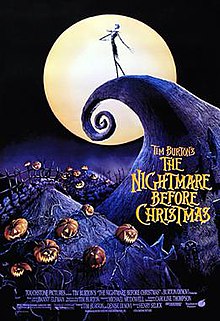
The Nightmare Before Christmas


The nightmare before christmas poster.jpg

Released:  November 13th, 1993
Rated:  PG
Distributor:  Buena Vista International
Starring:  Danny Elfman, Chris Sarandon, Catherine O’Hara, William Hickey
Directed by:  Henry Selick
Written by:  Tim Burton, Michael McDowell, Caroline Thompson
Personal Bias Alert:  doesn’t like stop-motion animation, lukewarm on Tim Burton

4 of 10


            The Nightmare Before Christmas should be one of my classics.  I was the perfect age when it came out, was drawn to dark kids fare, and was already steeped in Burton’s style.  But Nightmare slipped through the cracks to become one of those films I always knew of but never saw.  Now over twenty years later, the film seems to have lost its magic.  Perhaps replication has made it seem less original, perhaps I’m just too old, or perhaps (just perhaps) it has always been too lightweight to hold up its own reputation.

            In a world where each holiday has its own isolated town, Halloween’s frightful leader Jack Skellington (Chris Sarandon and Danny Elfman) finds himself tired of celebrating the same holiday every year.  While wandering the woods in misery, he comes across Christmas Town and is enchanted by its bright cheer.  Jack brings tidings of Christmas back to Halloween Town and endeavors to lead his newfound holiday the following year, but when his fear-loving townsfolk struggle to grasp the concept, Jack must somehow morph ghoulish ghosts into spry elves.

            It’s a silly plot, but to be fair, it is intended for very young children.  In this case, silly is fine, but lightweight is not.  So little happens in Nightmare that its brief runtime feels stretched tight.  It plays out with the intentional clunkiness of a TV special and lacks drive or stakes.  It falls prey to the idea that little kids can’t handle narrative menace, and it’s a much lesser and slightly patronizing film for it.  Consider Disney’s landmark Beauty and the Beast, released just two years before Nightmare.  This film presents kids with the prospect of being separated from your parents, bullied by a monster, and loosing forever the people that you love.  Nightmare has a potentially messed up Christmas and a bored protagonist.  See the difference?  How are children, let alone the adults being drug along with them, supposed to get invested in this story?

            As is often the answer with Tim Burton products, it’s the off-kilter, gothic style that’s supposed to reel you in.  The beauty of the film can’t be denied, even when you’re looking at worm-ridden monsters.  Burton and company designed a few truly memorable creatures here, from the lanky Jack to his pincushion admirer, which are all just the right amount of creepy.  Surrounding them are elaborate, misshapen buildings that you can imagine creaking and swaying in the wind.  Halloween Town is so perfectly themed that it’s a shock when things briefly switch to Christmas Town, with its popping colors and twinkling light.  It shows that the production team was capable of so much variety, which makes Halloween Town’s rigidly Tim Burton style a bit disappointing.  The entire look is replicated in past and future projects, the awe of which is diminished by so much repetition.  It’s still beautiful, don’t get me wrong, it’s just not enough to support an entire film.

            Filling out the scant plot is a bunch of supposedly peppy musical numbers composed by longtime Burton collaborator Danny Elfman.  While the songs have their moments, they’re filled with repetitive and semi-lazy lyrics.   Sentiments are reworded ad nauseam, and it’s not uncommon to hear nonsense phrases just because they rhyme.  The accompanying music is often pretty bare-bones, so if you’re not into the zany words, then the numbers will do little to brew your excitement.  Couple that with a ridiculously undercooked romance, and the film offers little else besides surface entertainment.

            Burton had Nightmare cooking in his brain for nearly ten years before the film went into production.  It seems to have been a passion project for the man, and perhaps because of that there’s little effort to make it appeal to a wider audience.  You’ll either be charmed by his style or you won’t, because there’s little other reason to watch this film.

Other Notes:
Ø  I’ve long been slightly creeped out by stop-motion animation.  Everything appears lifeless to me, and I have great difficulty connecting to any story told with this method.
Ø  Note that this film is Tim Burton’s baby, but he did not direct it.  He was too busy at the time with Batman Returns and Ed Wood.
Ø  The scientific method joke made me laugh out loud.  Poor Jack, it never sways public opinion.

Friday, November 20, 2015

The Hunger Games: Mockingjay - Part 2


Mockingjay Part 2 Poster.jpg

Released:  November 20th, 2015
Rated:  PG-13
Distributor:  Lionsgate
Starring:  Jennifer Lawrence, Josh Hutcherson, Liam Hemsworth, Woody Harrelson, Elizabeth Banks, Julianne Moore, Philip Seymour Hoffman, Sam Claflin, Donald Sutherland
Directed by:  Francis Lawrence
Written by:  Peter Craig, Danny Strong
Personal Bias Alert:  loved the books, felt the first two movies were rushed

8.7 of 10


            The Hunger Games film series did itself a great disservice with its first two installments.  While they were slick, action-packed entertainments with a good head on their shoulders, they still were paired down too much from the books.  I grimaced when I thought what this would do to the finale, which magnifies every unsure moment and sweeping tide into a cataclysmic revolution entirely out of Katniss’s control.  The brilliance of the book series is in how neatly every little thread comes together.  The film series had dropped too many threads, ones that seem extraneous early on but were actually tiny building blocks for the finale.  This is why I understand people’s aversion to the dramatic tonal shift of the two Mockingjay installments, but the straight and narrow gaze it gains is precisely what elevates it into the upper echelon of popcorn entertainment.

            Mockingjay Part 2 finds Katniss (Jennifer Lawrence) recovering physically from the attack by a mind-warped Peeta (Josh Hutcherson) but without a moment for mental healing.  The revolution led by District 13 is gaining ground, with the obstacles between themselves and President Snow (Donald Sutherland) are quickly falling away.  As usual, the tempestuous Katniss would rather be in the fight than dealing with its aftermath, so she sets off with Gale (Liam Hemsworth), Finnick (Sam Claflin), and company to enter the final fray:  a storming of the Capital.

             Of course, President Coin (Julianne Moore) and Plutarch (Philip Seymour Hoffman) won’t let her jeopardize their carefully orchestrated rebellion, so she’s saddled with a protection team and kept behind the front lines.  Katniss’s removal from center stage is something that could alternately be frustrating or thrilling to the audience.  The Hunger Games very pointedly doesn’t follow the ‘chosen one’ narrative, continuously making it more and more obvious that Katniss is just a girl with a bow and arrow that happened to be in the right (wrong?) place at the right time.  No, she’s a pawn in a much larger game, and both parts of Mockingjay examines just how much she is used by both sides of the fight.

            This along with the series parallel themes about the influence of propaganda takes the viewer down a dismal path, examining just how revolutions start and are sustained.  War is a part of it, of course, but there’s much more sinister and damaging things afoot in Mockingjay that are easier to see when the parts are viewed together.  I attended the Mockingjay double feature for this review, where I saw Part 1 and Part 2 back-to-back.  What’s remarkable is how difficult it is to remember where one film started and the other ended.  They really are a cohesive piece, each part lesser on its own, but a grand, ambitious slice of filmmaking when taken together.

            Director Francis Lawrence keeps the film clipping along, adhering to the production company’s desire for a YA smash.  The action is crisp, clean, and occasionally brutal.  A little girl’s death in the woods is no longer a cause for mourning.  The audience and the characters have moved far beyond that, but there’s still obvious concessions made to keep the PG-13 rating.  Meaningful deaths are rarely seen, and while this takes the sting out of some moments, there’s more obvious ways that its target audience is acknowledged.  The film’s points, at times, are stated a bit too simply, and its plot is still hampered by a love triangle that seems inconsequential even to those onscreen.  And yet even this has a powerful payoff, a small moment where one path is irrevocably shut down thanks to the choices made during war.

            It would’ve been possible to tell Mockingjay in one film if the series had set itself up better for the finale, but Lionsgate wanted a blockbuster franchise, so the crazy dresses and explosions were played up instead of the agonizing decisions faced by Katniss and everyone else caught up in this world.  The first two installments moved at a break-neck pace, making a slowdown for Mockingjay necessary.  Still, there’s barely a wasted moment in Mockingjay, as what may seem like repetitive weariness is designed to wear you down.  Yes, this is a series intended for young adults, and yes, it’s supposed to be a thrilling blockbuster.  Mockingjay just wants you to be thrilled by its ideas as well as its explosions, and it does a riveting job at entertaining you with both.

Other Notes:
Ø  Throughout the two Mockingjay films, there’s several scenes where nameless foot soldiers carry out attacks against the Capital.  Waves of them are cut down so that a select few can complete the mission.  That’s a stark visual motif for the wanton way lives are used in times of war.
Ø  Few things are better than a well-used Michelle Forbes.
Ø  Let’s all take a moment and say a final goodbye to Phillip Seymour Hoffman.

Sunday, November 15, 2015

The 33


The 33 (film) poster.jpg

Released:  November 13th, 2015
Rated:  PG-13
Distributor:  Alcon Entertainment
Starring:  Antonio Banderas, Rodrigo Santoro, Juliette Binoche, James Brolin, Lou Diamond Phillips
Directed by:  Patricia Riggen
Written by:  Mikko Alanne, Craig Borten, Michael Thomas
Personal Bias Alert:  likes cast, remembers the real-life incident

5.8 of 10


            Five years ago, the story of 33 trapped miners in Chile captured the world’s attention.  News teams had two ways to approach the story:  either focus on the mine’s terrible safety record or the massive international rescue effort.  One side of the story takes you down the dark alley of capitalism and greed, while the other is an even narrower path of international altruism.  What I remember of the story is the miners reaching the surface to a cheering, flag-waving crowd.  As a world, we chose to applaud the men in the mine and those who saved them.  The 33 makes the same choice, and while that does make it a bit of a lightweight, it still feels wrong not to applaud.

            Even without knowing the particulars of the story, it’s safe to assume that the screenwriters played fast and loose with the facts, as everything in The 33 plays out in tidy, familiar storylines.  A sister, a family, and a pregnant wife is established, the men take a portentous trip underground, and the mine collapses.  This scene, with the rock crumbling around them in the dark, is viscerally thrilling, a top-notch slice of disaster filmmaking that captures the chaos and confusion that must have permeated the situation.  Once the dust settles, a drawn-out survival story ensues, as it took 69 days for the miners to be rescued.

            If the movie is to be believed, then it was faith and family that kept the men going, along with the rousing leadership of Antonio Banderas’s Mario.  Banderas goes big here, shaking his head and yelling vehemently at his fellow men, an energy that is unmatched by any of the other actors.  Rescue efforts on the outside are led by a sister played inexplicably by the very French Juliette Binoche (her ethnicity is never commented upon) and the Chilean Minister of Mining (Rodrigo Santoro).  Both characters have their stirring speeches, but Binoche and Santoro dial them back a bit, making them feel more of a piece with the rest of the film than Banderas’s strained effort.  None of this derails the film, though, as the stories of fathers trying to get home to their families and troubled men having revelations in the dark is superficially easy to connect with.  More troubling problems are hinted at but not explored, indicating that the screenwriters wanted to stick with a relatively upbeat tone instead of dredging through the mud.

            Stylistic choices aside, The 33 has a nearly deadly pacing problem.  Part of this is due to the timeline of the true story, with the miner’s being reached and sent supplies long before they are pulled out.  After watching dirty, sweaty men nearly starve to death, it’s hard not to lose steam once they’re all wearing nice shorts and sleeping on bed pads, and yet the movie drags on for a long time in this state.  Without the early survival-story tension (which is well done considering we all know how the story ends), the cookie-cutter characters and relationship dramas aren’t enough to hold the audience’s attention. 

Even with this limp into the finale, there’s still satisfaction in rooting for people to do right by each other, and that’s what the world ended up doing for 69 days.  In this case, a pat on the back is well-deserved, and that’s what The 33 ends up feeling like.

Other Notes:
Ø  Another inexplicable casting choice is Bob Gunton (the warden in The Shawshank Redemption) as the president of Chile.
Ø  Of course the American drill makes it through.  I know that’s what really happened, but I still cringed a bit.
Ø  The score was done by the late James Horner (Braveheart, Titanic, A Beautiful Mind), and its overt manipulations match what the film is trying to do. 

Wednesday, October 28, 2015

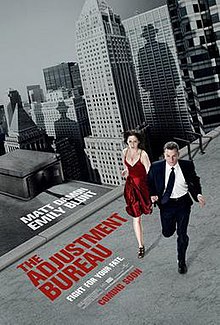
The Adjustment Bureau


The Adjustment Bureau Poster.jpg

Released:  March 4th, 2011
Rated:  PG-13
Distributor:  Universal Pictures
Starring:  Matt Damon, Emily Blunt, Anthony Mackie, John Slattery
Directed by:  George Nolfi
Written by:  George Nolfi
Personal Bias Alert:  likes the cast, likes old-school sci-fi

7.7 of 10


            Floating in on a puff of fresh air is The Adjustment Bureau, a sci-fi romance that is the polar opposite of the grim, desaturated landscapes that dominate modern fantasy.  It’s bright and bubbly, begging you to like it just as much as much as the main characters pine for each other’s attention.  There’s an underrated value to this sort of film, the kind that’s perfect in just about every situation for every sort of person.  Broad appeal is nothing to be scoffed at, not when it’s done as assuredly and as winningly as it is in this film.

            Undoubtedly, the MVPs of this endeavor are Matt Damon and Emily Blunt as the love-struck leads David and Elise.  They’re two honest-to-god movie stars, enjoyable to watch no matter what they’re doing, even if that’s just surviving alone in space or singing about a cow in the woods.  When put together their chemistry crackles, and watching them flirt is one of the more enjoyable things you can do with your free time.  Of course, the film puts obstacles in their way, in particular a shady group of men in fedoras who actively prevent them from being together, and their battle against these men forms the crux of the film.

            Many romance-against-impossible-odds stories falter when the going gets rough primarily because the relationship isn’t well established.  It’s either too rushed or not genuinely felt, and the audience is left wondering why the pair are fighting so hard to stay together instead of just moving on.  This is never an issue in The Adjustment Bureau, not because the antagonists are weak (the fedora-clad group have some mysterious connection to God), but because Damon and Blunt sell their romance so well.  And the writing backs them up, making Elise and David engaging, charming folk, which the actors pounce on and amp it up to 10.  How refreshing it is not to be taunted by a rabble-rousing antihero, but to be given characters you instantly like, leaving you to worry only about the machinations of the plot getting in their way.

            Adapted by writer/director George Nolfi from a Philip K. Dick short story, the plot throws enough thoughtful menace into the mix to give the fluffy romance some weight.  For all the pair have going for them, it seems plausible throughout that they may not end up together.  God is a pretty strong force, after all, even if he is only referred to in code.  Nolfi plays around with other concepts as well, namely the positives and negatives of free will, and although it’s not expounded upon, it provides enough layering to keep the film from being a lightweight.  Hardcore sci-fi fans may be disappointed by the film’s airiness, but it’s clear that Nolfi didn’t want the audience to get too bogged down by serious thought.

            Where Nolfi does take some chances, and where he might lose a few viewers, is his decision to present the film’s action with a punchy realness.  Nolfi is a screenwriting alum of the Bourne series, and the imprint of that can clearly be seen here.  When Damon’s David is under duress, the film becomes shakier and narrows in to the action.  Cars crunch and faces slam, the blows palpably resonating to the audience.  It would be understandable to find this choice incongruous with the rest of the film, but Nolfi makes it work, using it to emphasize the fedora men’s power and to up the ante against our protagonists.  This element is sparingly used, taking a backseat to the overpowering nature of the film’s romance, but it pops up enough to turn off those severely averse to action.  To everyone else, it will simply add a jolt of energy to the proceedings, making the romantic drive more immediate and in more real danger.

            It’s this tidy package of action, romance, and science fiction that gives The Adjustment Bureau its broad appeal, and the winning combination of Matt Damon and Emily Blunt put the film into rarified air.  This satisfying of a crowd-pleaser doesn’t come along too often, and it’d be a shame to overlook the charm it has to offer.

Other Notes:
Ø  My one solid negative on this film is the score.  It’s just too basic and too prominent.
Ø  I love this kind of old-school, on-the-nose sci-fi.
Ø  This goes down as one of the best examples of on-screen chemistry I’ve ever seen. 

Sunday, October 4, 2015

The Martian


The Martian film poster.jpg

Released:  October 2nd, 2015
Rated:  PG-13
Distributor:  20th Century Fox
Starring:  Matt Damon, Jessica Chastain, Kristen Wiig, Jeff Daniels, Michael Peña, Kate Mara, Sean Bean, Sebastian Stan, Chiwetel Ejiofor, Aksel Hennie
Directed by:  Ridley Scott
Written by:  Drew Goddard
Personal Bias Alert:  loved the book, likes the cast

7.5 of 10


            It must’ve been hard to decide on a release date for The Martian.  It staunchly doesn’t fit into traditional categories, proving far too light to be an awards season contender, too sciency to be a blockbuster, and too sprawling to be a thriller.  These oddities can be traced directly back to the book’s author, Andrew Weir, who first self-published the story chapter by chapter for free on his personal website.  Without the influence of editors or the publishing gristmill, Weir was free to craft the story as he pleased, and his chosen blend of hard science fiction with survival grind struck a chord with readers.  A legit publishing deal and a long stay on the New York Times bestseller list led to this most improbable situation:  a big-budget movie adaptation with an A-list cast and a legendary director.

            The story itself is a blend of the extraordinary and the mundane, following the world’s attempt to save an astronaut stranded on Mars.  It’s extraordinary to think of a man alone on an entire planet, while it’s mundane in the logistics and coordination.  This is a 100 million dollar movie that features a PR spokesperson, physics, chemistry, and potato farming.  It’s not edge-of-your-seat thrills, but for most of us, the endless strategy meetings and the small victories will hit closer to home than Ethan Hunt taking down mysterious international criminals.  Because of this familiarity, there’s moments in The Martian that hit you like an emotional sledgehammer, without warning making you realize how much you’ve connected with astronaut Mark Watney (Matt Damon).  This realism, a hallmark of hard science fiction, is the film’s greatest strength, and it’s something that audiences are clearly clamoring for.

            Coming in just behind this highlight is the extraordinary performance by Matt Damon.  He must pull off the smart, optimistically dark-humored astronaut with no one to play off of, not even a sentient computer like HAL or GERTY.  It’s hard to think of anyone besides Damon who could command the screen and make you care so deeply for a man without the manipulative trappings of a wife and kids left behind.  In fact, you only get a brief mention of his parents back home, and the connection you form with Watney is directly due to Damon’s vivacious performance.

            The rest of the star-studded cast breeze in and do their jobs, all of them correctly choosing to appear as average joes supporting the extraordinary Watney.  There’s almost no plot outside of the struggle to save the astronaut, which becomes both a strength and a weakness for the film.  The upside is that the story focuses on its strongest aspect:  the convoluted problems that must be worked through to even have a chance at saving him.  The downside is that there’s nothing to back that mystery up.  If, as many have, you’ve already read the book, then you’ll know all the solutions and problems that crop up along the way.  It’s still a pleasant ride to see it all play out, but without anything additional to sink your teeth into, the film feels a bit flat for long periods of time.  You’ll likely feel the same way if you attempt to watch the film multiple times, which will greatly affect the film’s staying power.

            Director Ridley Scott, who’s had lots of experience filming space movies, gives the film a solid if uninspired visual palette.  The rocky redness of Mars is occasionally beautiful, but in adhering to the book’s spirit of accuracy, the space stations were designed to look cleanly familiar.  As an offset to this occasional beauty, there’s also occasional stumbles on small things like the simulated weightlessness of space, evening out any high points and leaving Scott’s contributions rather unremarkable.  The visuals simply aren’t enough to demand rewatching, fitting in with the rest of the film’s one-off greatness.

            Most filmgoers will likely find The Martian to be a crowd-pleasing mystery populated by likable characters in an extraordinary setting.  They won’t catch on to the only other thing this film has to offer, which is a subtle love letter to space exploration and the wonders of science.  This element is much more prominent in the book, and as wonderful as it is that it remains here at all, its diminishment lessens the film as a whole.

Other Notes:
Ø  I’ve heard some pessimistic rumblings about the involvement of the Chinese space program.  This plot point is present in the book and serves to emphasize the cooperation that large scientific efforts encourage.  The fact that people don’t pick up on this proves how detrimental the downplayed pro-science stance becomes.
Ø  Drew Goddard was initially going to direct this.  I’m curious what his film would have looked like.
Ø  Spoiler alert:  Sean Bean doesn’t die.
Ø  That’s all I’ve got.  Now I need to go science the shit out of something.

Wednesday, September 30, 2015

Capturing the Friedmans


Capturing the Friedmans poster.jpg

Released:  June 13th, 2003
Rated:  Not Rated
Distributor:  Magnolia Pictures
Starring:  Arnold Friedman, Elaine Friedman, David Friedman, Jesse Friedman
Directed by:  Andrew Jarecki
Personal Bias Alert:  likes crime docs, has voyeuristic tendancies

9.5 of 10


            Documentaries, like all genres, can be broken down into subtypes.  There’s crime, historical, scientific, cultural, etc, all of which occasionally intertwine within the same piece.  Capturing the Friedmans is one of those mixers, using the attention-grabbing crime format (see Jarecki’s more recent The Jinx for proof of how popular this can be) to hook you into the film’s real story:  the rapid disintegration of a quintessential American family. 

Under the microscope is the Friedmans, an upper-middle class Jewish family consisting of three boys (David, Seth, and Jesse), a stay-at-home mom (Elaine), and a father who was a respected teacher (Arnold).  Arnold, as it turns out, also indulged in pedophilic pornography, and the police’s discovery of one such magazine in the late ‘80s opened a sinkhole that would drag his entire family down with him.  The police alleged that Arnold and his youngest son, Jesse, engaged in gross sexual abuse of the boys in their after-school computer class, which one investigator evocatively referred to as a ‘free-for-all’.  Arnold and Jesse denied these claims, and as the charges stacked up and the trial loomed, oldest son David inexplicable turned on his camera to document their downfall.

David’s voluminous footage forms the core of the film, providing a wide-eyed look at a disaster few people have ever experienced.  There’s a voyeuristic fascination to watching it all go down, the same inappropriately inquisitive drive that leads all of us to take in stories of the strange and the disturbing.   The Friedmans, it seems, were primed for just such a breakdown, as the stress of the accusations broadened preexisting fissures and personal blind spots.  Their screaming fits and constant needling is drama of the highest order, melding with the crime backdrop and the inescapable fact that this seemingly stable family descended to such an ugly place makes Capturing the Friedmans into a riveting piece of real-life horror.

The backdrop proves to be just as salacious as the behind-the-scenes footage, as director Andrew Jarecki establishes just how heinous the charges against the father and son are through interviews with police and victims.  It’s here, though, that Jarecki makes his lone and minor misstep.  The assemblage of the footage, with hard cuts that immediately put into question the more shocking claims made by the police and even the victims, shows that Jarecki was far from objective about the case.  Since the film was released, it’s been uncovered that Jarecki funded Jesse Friedman’s legal battles, and while Jarecki is certainly sympathetic towards Arnold, he’s downright campaigning for Jesse’s innocence through this documentary.  While it’s hard to argue that the charges against the two weren’t trumped up, the oddities of the situation leave it difficult to digest Jarecki’s firm stance.

While Jarecki does come down hard on the prosecution’s case, he uses this questioning to bring to light some very real and very uncomfortable scenarios.  His explanation for how these charges might’ve been conjured will shake your confidence in police procedures and the reliability of the human mind, calling into question how anyone could truly be sure about what happened in those computer classes.  Couple that with the insistent and borderline delusional proclamations of innocence from David Friedman and the film becomes representative of how much humanity likes to deny that we live a hazy, incomprehensible world.

With all this depth to back up the surface pleasures, Capturing the Friedmans is the kind of documentary that can be taken in on a few different levels.  The first viewing will likely overwhelm you no matter what you’re trying to get from it, but in spite of all its grimness, this is a documentary that demands multiple viewings if you ever want to find out everything it has to offer.

Other Notes:
Ø  The scene around the dinner table where Arnold quietly resigns himself to letting it all fall apart is the kind of unnervingly honest moment that a film crew simply isn’t able to capture.
Ø  Sex abuse and a crumbling family wasn’t what Jarecki set out to document.  He initially interviewed David Friedman for a short on NYC clowns.
Ø  The film lost Best Documentary Feature at the 2004 Oscars to the Errol Morris-led The Fog of War.

Wednesday, September 23, 2015

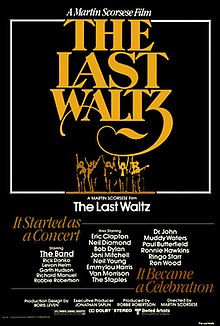
The Last Waltz


LastWaltzMoviePoster.jpg

Released:  April 26th, 1978
Rated:  PG
Distributor:  United Artists
Starring:  Rick Danko, Levon Helm, Garth Hudson, Richard Manuel, Robbie Robertson
Directed by:  Martin Scorsese
Personal Bias Alert:  not familiar with The Band, not big on concert films

9 of 10


            Consistently cited as one of the best concert films ever made, The Last Waltz will seem like an intimidating watch to young viewers looking to check the boxes of cinema history.  The band in the film is literally called The Band, a successful but not infamous group that many people under 30 have probably never have heard of, and helming the film is the seemingly unquestionable Martin Scorsese.  To watch this film and not like it would certainly induce howls of scorn from cinephiles, but the fact is that personal taste will always be a significant factor when it comes to concert films.  No matter how technically sound the movie is, if you don’t care for the music, you’ll have little chance of liking the film.  This is what makes The Last Waltz so intimidating; music from a bygone era often doesn’t play well for younger listeners.  Luckily, The Band’s music is remarkably good, likely to win over even those who are averse to their rockabilly-esque sound.

            At the time of filming, The Band consisted of Rick Danko (bass, vocals), Robbie Robertson (guitar, vocals), Levon Helms (drums, vocals), Garth Hudson (keyboards), and Richard Manuel (keyboards), most of whom periodically pick up other instruments.  The concert was staged as an elaborate farewell to touring and featured appearances from other famed performers like Bob Dylan, Eric Clapton, Joni Mitchell, and Muddy Waters, to name a few.  There’s allusions to why the band is quitting, including the member’s ages (all in their 30’s) and the toll that touring takes, but these musings are only half-baked observations by those still immersed in the lifestyle and are best overlooked if you’re trying to get the most you can from the film.  It plays best as a pure encapsulation of the concert experience, with sweeping performances broken up by brief interview snippets that prove to be mildly boring letdowns.  Great musicians like those in The Band give infectious performances, but their basic humanity is always shown when they must stop and set up for the next song.  It’s like an actor breaking character; one moment they are glorious, larger-than-life figures, and the next they are awkward things fumbling with straps and chords.  The Last Waltz, whether intentionally or not, captures this sensation perfectly as it weaves in and out of performances and interviews.

            The film begins with a title card stating ‘This film should be played loud!”  I don’t know if anything else could give away Scorsese’s intent, particularly for his audience to have a raucous good time, more succinctly.  It then launches into the band’s encore and an interview in which Scorsese directs Robertson on how to phrase a sentence.  This was never intended, Scorsese is saying, to capture precisely what happened that night.  He’s fessing up to the manufactured nature of the film, which was limited by the practicalities of capturing a live performance.  Dylan only allowed two of his songs to be filmed, cameras ran out of tape, and the sound recording was so bad that most of the performances were dubbed in post-production.  None of this matters, though, because Scorsese worked tirelessly to map out as much as he could in advance and fix anything that went wrong later.  He hired a squadron of supremely talented camera operators and storyboarded how the performances should be captured, giving the film a tight visual style that both covers everything that is going on but allowed for small moments, like miscues and chuckles, to be captured in all their effervescent glory.  The visuals are what set apart a concert film from a concert album, and Scorsese uses these to capture just how much infectious fun everyone onstage was having. 

Scorsese was hired through Robertson, and the film does suffer from focusing a bit too much on him over the other band members.  Still, there’s no doubt that few other people would’ve been able to manage the chaos that this production surely was better than him.  The end product is a joyous romp, the preservation of a mythical performance that never really was.

Other Notes:
Ø  Some of the performance footage was filmed separate from the actual concert.
Ø  It took about 40 minutes for them to play a song I know, and it turned out to be my favorite performance in the movie:  The Weight.
Ø  Those last lines are the perfect way to go out.

Saturday, September 19, 2015

Maze Runner: The Scorch Trials


Maze-Runner-The-Scorch-Trials-Poster.jpg
Released:  September 18th, 2015
Rated:  PG-13
Distributor:  20th Century Fox
Starring:  Dylan O’Brien, Ki Hong Lee, Kaya Scodelario, Thomas Brodie-Sangster, Giancarlo Esposito, Aiden Gillen, Jacob Lofland, Barry Pepper, Rosa Salazar, Lili Taylor, Alan Tudyk, Patricia Clarkson
Directed by:  Wes Ball
Written by:  T.S. Nowlin
Personal Bias Alert:  liked The Maze Runner, likes Y.A. dystopias

4.9 of 10


            Another week brings another Y.A. adaptation trying to stretch its legs.  While the genre seems to be winding down, Maze Runner was late to the game, releasing the first film nearly a year to the day before The Scorch Trials.  That opener was a rough but interesting potboiler that held itself on the rails until its bewildering third act.  In this second installment, the young filmmakers helming the series must open up the world even more, and instead of finding solid footing they only slide further down the rabbit hole.

            Having escaped the maze, the surviving Gladers (yes, still a dumb name) must elude the clutches of WKCD and figure out how to survive the crumbling world around them.  Thomas (Dylan O’Brien), Teresa (Kaya Scodelario), Minho (Ki Hong Lee), and company are all targets, we find out, because of their immunity to the virus that has decimated society.  Those infected are essentially zombies, and the mysteriously powerful WKCD believes that a cure can be found in the blood of the immune.  What precisely WKCD is remains a mystery.  Is it a powerful biomedical company?  An evil organization?  A branch of the government?  It could be argued that this isn’t revealed to the audience because Thomas and the other Gladers don’t know the answer, but the multitude of incongruous mysteries that keep stacking up in this series makes a poorly thought-out plot the more likely scenario.  Without giving away what happens in Scorch Trials, it infuriatingly never explains what the hell putting a bunch of kids in a maze accomplished.  In fact, if WKCD only wants the teens in order to develop a cure, taking a whole bunch of them away from your scientists and putting them in mortal danger seems like the last thing you’d want to do.  But there are hints in Scorch Trials that something much larger is going on.  It’s a distinct possibility that all the odd plot points will be explained by some big plot twist in the third film, but any twist that might be on the horizon will be lessened by how muddled its buildup has become.

            Scorch Trials is essentially a chase film, with the Gladers running from civilization pocket to civilization pocket with WKCD nipping at their heels.  These new encounters allow fresh blood to join their dour band, but the speed with which Scorch Trials moves from place to place never allows them to feel fully integrated into the group.  The background players fade into a faceless pack running behind Thomas, Teresa, and Minho, and even the main player’s stories feel simultaneously trite and aimless.  Thomas becomes the de facto leader of the group, but it’s clear that he’s making up the plan as he goes.  Without any clear goal, the film devolves into an episodic series of action sequences that, despite being well staged, never have any meaning.  Due to some heavy foreshadowing, the fate of two of the characters are sealed early on, and the familiar cliffhanger ending makes the whole thing go out with a whimper instead of a bang.

            The smartest move this series made was retaining director Wes Ball, who despite never making any other feature-length films has an incredible eye for visceral action.  The first film featured a handful of tense maze sequences, and Scorch Trials opens up into a never-ending play land of dystopian action.  He’s still hamstrung by a tired and repetitive plot, but Ball never lets the action sequences degrade into such cookie-cutter material.  He plays with the lighting, colors, and sound design to construct some truly terrifying sequences, and one shot in particular is an attention-grabbing moment of quiet despair.  Maze Runner is shaping up to be quite a feather in Ball’s cap, and hopefully one day he is able to find material that matches his extraordinary talent.

            As with The Maze Runner, what The Scorch Trials gets right can largely be traced back to Ball.  The material he’s working with simply isn’t that great, and the young cast is nothing more than a competently likable group of actors.  None of it is particularly terrible, but Scorch Trials remains a definite step back for the series as a whole.

Other Notes:
Ø  I have to mention how delighted I am by Minho.  He’s essentially Thomas’s right hand; a smart, strong guy that’s a straight-up action hero.  He also just so happens to be of Asian descent, which makes the character a rarity in Hollywood.
Ø  I still don’t feel much chemistry between O’Brien and Scodelario.
Ø  “I’m tired of running.”  Good, because I’m tired of watching you run.